Understand the critical difference between a Chinese Custom Steel Manufacturer vs Standard Trading Company to avoid costly project delays. Direct manufacturers ensure EN10219 compliance and traceable...
The lowest FOB price is often the most expensive line item on your final project budget.
Choosing a verified Chinese Custom Steel Manufacturer vs Standard Trading Company determines whether your structural steel arrives with traceable mill certificates and precise dimensional tolerances, or as a batch of non-compliant material that fails on-site inspection. A direct manufacturer controls the production line, quality assurance, and certification process, while a trading company merely intermediates the transaction without technical oversight of the physical product.
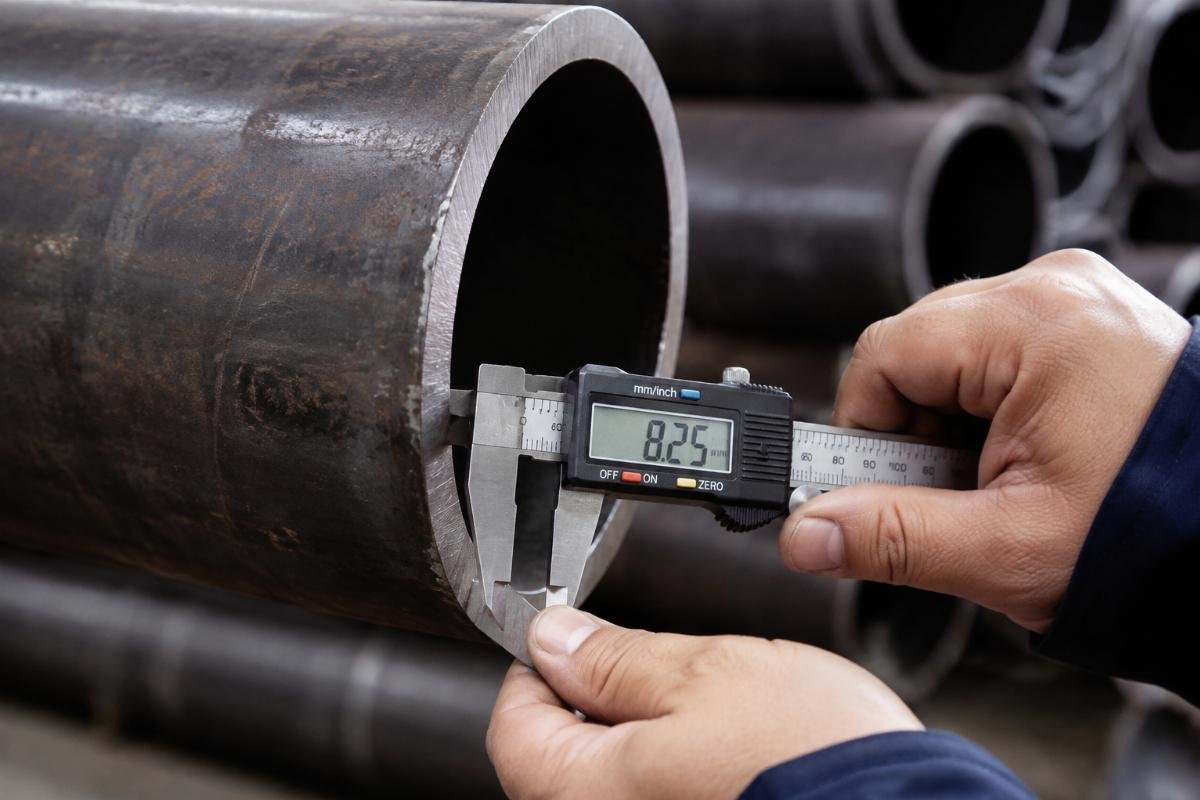
I still remember the humidity in Lagos during that warehouse project. The European EPC contractor had specified EN10219 S355JR rectangular hollow sections for the primary framework. The local procurement team sourced quotes from four different Chinese suppliers. One trader offered a price significantly below the market average, backed by PDFs of certificates that looked authentic at first glance. But when the steel arrived, the wall thickness deviation was beyond acceptable limits. The welding cracks appeared within days. The site engineer pulled out calipers and started measuring every single piece. The entire batch was rejected. That loss wasn’t just about the steel; it was about the cranes standing idle, the labor costs, and the delayed handover. This experience highlights why understanding the difference between a Chinese Custom Steel Manufacturer vs Standard Trading Company is critical for risk mitigation.
The distinction isn’t just about who signs the invoice. It is about who holds the responsibility for the metallurgical integrity of the steel. When you source from a manufacturer, you are buying from the source of production. When you buy from a trader, you are buying from a source of information, which may or may not match the physical reality of the cargo.
What Is the Real Difference Between a Manufacturer and a Trader?
Manufacturers own the production lines and quality control protocols; traders act as intermediaries with limited technical oversight.
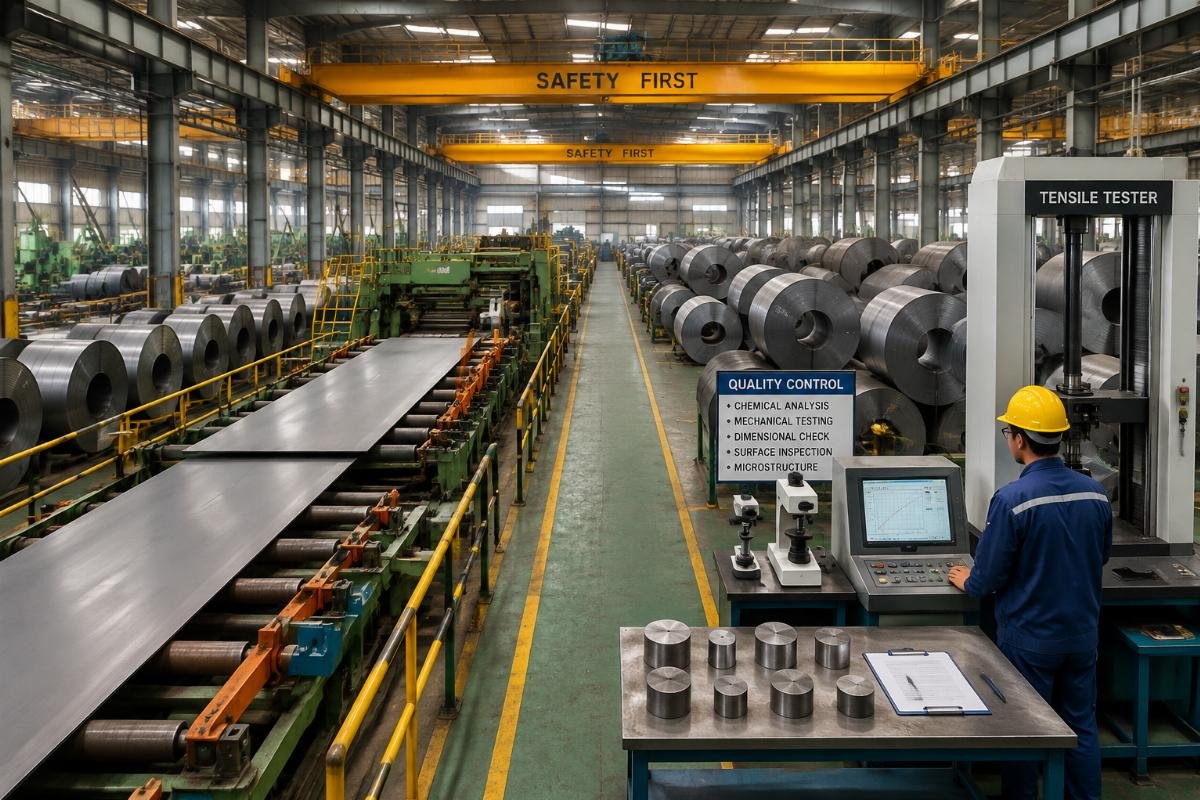
The core difference lies in accountability and visibility. A manufacturer has an in-house laboratory, production schedules, and direct access to raw material coils. A trading company typically operates from an office, coordinating between multiple factories and buyers. While traders can offer convenience in consolidating small orders, they lack the authority to halt production if a quality issue arises. They cannot adjust the rolling parameters in real-time to meet specific tolerance requirements.
Feature
Direct Steel Manufacturer
General Trading Company
Quality Control
In-house laboratory with tensile and impact testing capabilities
Relies on factory-provided documents; no independent verification
Certification Traceability
Mill Test Certificates (MTC) linked to specific heat numbers and production batches
MTCs may be generic or mismatched with actual delivered goods
Customization Ability
Can adjust production lines for non-standard sizes and specific grades like S355J2
Limited to existing stock or standard sizes available from partner mills
Communication Accuracy
Direct technical dialogue with engineering and production teams
Information passes through multiple layers, increasing error risk
Price Structure
Factory-direct pricing with transparent cost breakdown
Markup added for service and coordination; hidden costs possible
[NEED_CITE: importance of direct manufacturer oversight for structural steel compliance]
In my early years running foreign trade, I visited countless facilities. Some “manufacturers” were actually just large warehouses with a few branding stickers. The real test is whether they can produce the steel to your exact specification. For instance, if you need EN10219 structural steel supplier services for a bridge project requiring specific impact resistance at low temperatures, a trader might send you standard S355JR instead of the required S355J2 because the difference isn’t visible to the naked eye. Only a manufacturer with proper lab equipment can verify the impact energy values before shipping.
Understanding this difference helps you ask the right questions. Instead of just asking for a price, ask for the production schedule. Ask to see the lab reports for the specific batch you are ordering. A manufacturer will welcome these questions; a trader will hesitate.
Why Do “Cheap” Quotes Often Lead to Project Delays?
Lack of dimensional tolerance control in non-specialized sources causes on-site fitting failures.
It is a common misconception that lower initial cost equals better value. In structural steel sourcing, the hidden costs of rework, delay, and rejection far exceed the savings from a cheaper quote. Traders often source from smaller, less regulated mills to maximize their margin. These mills may not adhere strictly to EN10219 standards regarding ovality, straightness, or wall thickness tolerance.
Consider a case in the Middle East. A distributor ordered a large volume of square hollow sections for a multi-story car park. The trader provided a competitive price by sourcing from a mill that did not specialize in structural sections. Upon arrival, the sections had significant ovality. The fabricators could not weld them properly without extensive grinding and adjustment. The project timeline slipped by weeks, and the additional labor cost wiped out any initial savings.
[NEED_CITE: cost impact of dimensional tolerance failure in construction projects]
When you evaluate a Chinese Custom Steel Manufacturer vs Standard Trading Company, look beyond the FOB price. Consider the total cost of ownership. A manufacturer ensures that the steel meets the required tolerances because their reputation depends on repeat business from serious contractors. They have the machinery to calibrate the dimensions precisely. A trader, focused on moving volume, may overlook these details until it is too late.
This is why verifying the source is essential. If the price seems too good to be true, it usually means corners have been cut in the production process. These corners become visible only when the steel reaches your fabrication shop or construction site.
How to Verify Authentic EN10219 Compliance Before Shipping?
Require third-party inspection access and cross-check MTC data with physical sampling.
Verification is not just about receiving a PDF certificate. It is about ensuring that the certificate matches the physical product. Many traders provide generic MTCs that do not correspond to the actual batch shipped. To avoid this, you must implement a rigorous verification process.
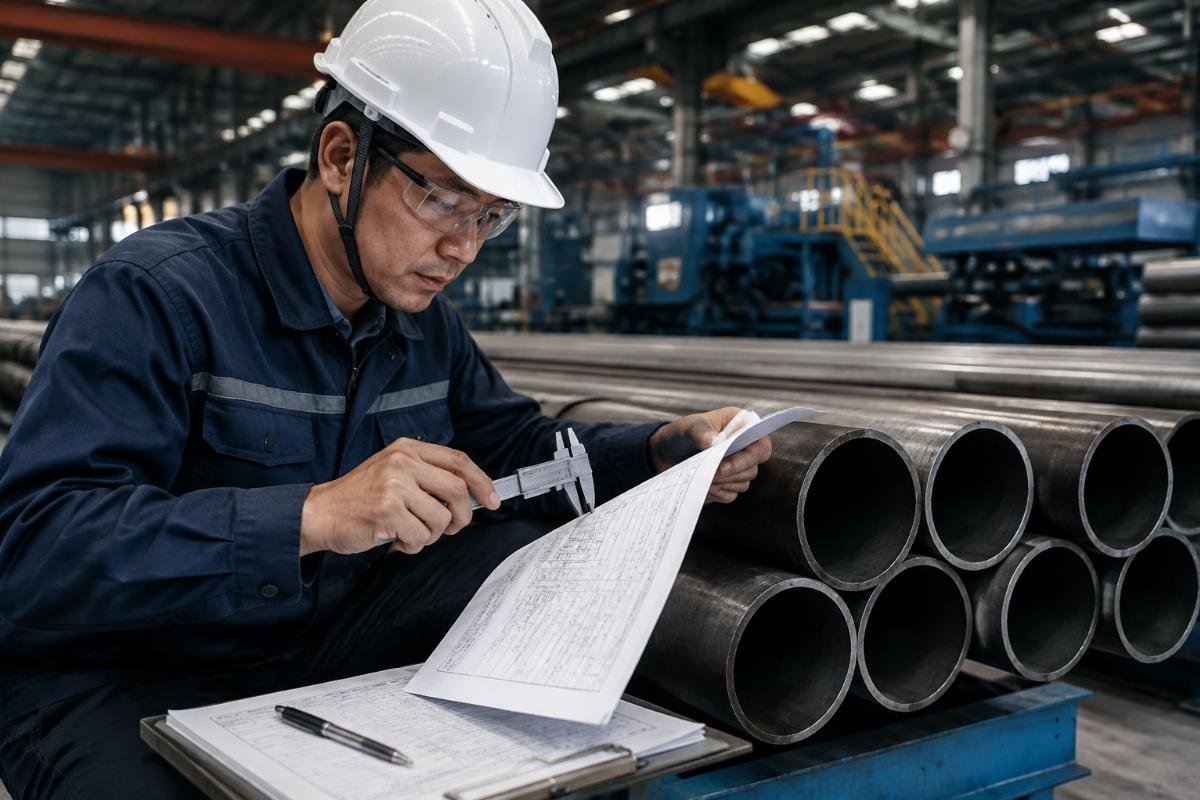
First, request the Mill Test Certificate (MTC) according to EN 10204 3.1 or 3.2 standards. Check that the heat number, grade, and dimensions on the certificate match the markings on the steel itself. Second, engage a third-party inspection agency like SGS or Bureau Veritas to conduct a pre-shipment inspection. They can perform visual checks, dimensional measurements, and even witness mechanical testing if required.
[NEED_CITE: standard procedures for verifying steel mill certificates]
Third, assess the manufacturer’s in-house laboratory capabilities. A genuine direct factory steel pipes China provider will have equipment for tensile testing, impact testing, and chemical analysis. Ask for recent test reports from their lab. If they cannot provide these, they are likely not the actual producer.
Verification Step
Action Required
Expected Outcome
Document Review
Cross-check MTC heat numbers with physical markings
Exact match between document and product
Third-Party Inspection
Hire independent inspector for pre-shipment check
Unbiased confirmation of quality and quantity
Lab Capability Check
Request recent internal test reports
Evidence of in-house quality control infrastructure
Sample Testing
Perform random sampling for key dimensions
Confirmation of adherence to tolerance standards
By following these steps, you can verify steel mill certificates effectively. This process filters out traders who rely on paperwork rather than product quality. It ensures that the steel you receive is compliant with the relevant standards, reducing the risk of on-site rejection.
When Should You Choose a Custom Manufacturer Over a General Supplier?
For non-standard sizes, specific grade requirements, and integrated surface treatments.
Not every project requires a custom manufacturer. For standard off-the-shelf items, a trader might suffice. However, for complex projects involving non-standard dimensions, specific grades like S355J2, or integrated surface treatments, a manufacturer is the only viable option.
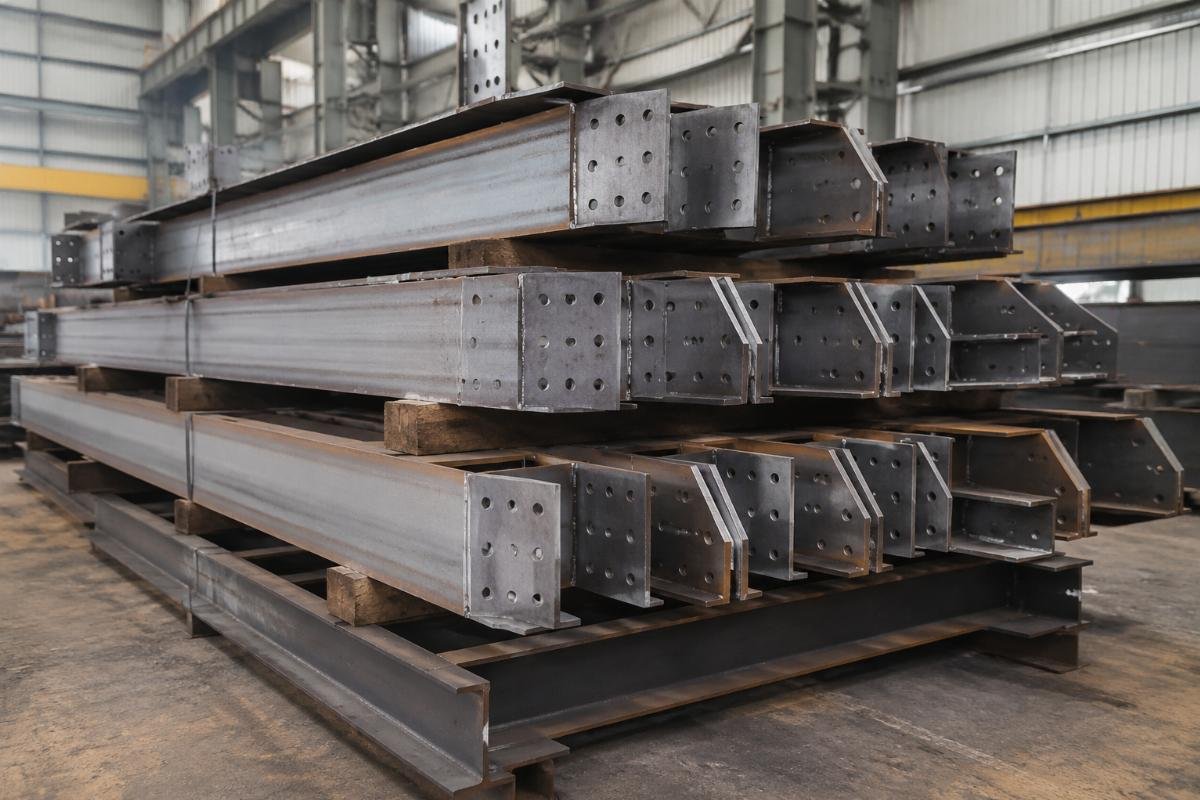
A recent project in Southeast Asia involved a fabricator needing mixed-container consolidation of various structural components. They required shot blasting and painting for all pieces. A trader quoted a high markup for coordinating these services across different suppliers. By working directly with a manufacturer that offered integrated surface treatment, the fabricator saved a significant percentage on the total cost. The manufacturer controlled the entire process, from cutting to painting, ensuring consistency and reducing lead time.
[NEED_CITE: benefits of integrated manufacturing services for structural steel projects]
When sourcing S355JR rectangular hollow sections sourcing, consider the complexity of your requirements. If you need custom cuts, specific tolerances, or specialized coatings, a manufacturer can tailor the production process to your needs. A trader lacks this flexibility. They can only offer what is available in the market, which may not meet your specific engineering requirements.
Choosing the right partner depends on your project’s specific needs. For standard items, price and availability may be the primary factors. For custom or critical structural components, quality control, traceability, and technical support become paramount. This is where the advantage of a Chinese Custom Steel Manufacturer vs Standard Trading Company becomes clear. A manufacturer provides the technical depth and operational control necessary for successful project execution.
Conclusion
Quality assurance in structural steel sourcing begins with selecting the right supply chain partner.
The choice between a manufacturer and a trader impacts every aspect of your project, from initial cost to final installation. By prioritizing traceability, verifying certifications, and understanding the limitations of intermediaries, you can mitigate risks and ensure project success. Always look beyond the initial quote to the underlying value of direct manufacturing control.
Editor covering global sourcing, supplier verification, and industrial product knowledge. Content is compiled from manufacturer specifications, industry standards, and hands-on experience with international B2B buyers. Every article is fact-checked before publishing to help procurement professionals make informed decisions.



Discussion
0 Comments