Mill Certificate Standards for Chinese Steel Export Supplier
Master Mill Certificate Standards for Chinese Steel Export to prevent costly customs rejections and demurrage. Learn the critical differences between EN 10204 2.2 and 3.1 certificates, verify heat num...
Mill Certificate Standards for Chinese Steel Export Supplier
A generic mill certificate is not a guarantee of quality; it is often just a piece of paper that customs will reject.
For any structural steel export from China, the only document that satisfies international tender requirements and prevents costly port delays is an EN 10204 3.1 Mill Test Certificate (MTC) with independent verification signatures and fully traceable heat numbers.
I still remember the humidity and the smell of diesel at Jebel Ali Port in Dubai. I was standing next to a container of H-beams that had been sitting there for weeks. The issue wasn’t the steel itself; the beams were straight, the dimensions were correct, and the surface treatment was intact. The problem was the paperwork. The certificate provided by the factory was a standard EN 10204 2.2 document, self-declared by the manufacturer. The project consultant, however, required an EN 10204 3.1 certificate with specific impact test data for low-temperature performance. Because the certificate lacked the independent third-party signature and the specific impact energy values, the entire shipment was held up. The demurrage costs accumulated daily, eventually exceeding the profit margin of the steel order. This experience taught me that in international trade, the Mill Certificate Standards for Chinese Steel Export are not administrative formalities; they are legal definitions of material integrity. [NEED_CITE: distinction between EN 10204 2.2 and 3.1 regarding third-party involvement]
Understanding these standards is critical for anyone sourcing structural components. When you look for a reliable Mill Certificate Standards for Chinese Steel Export supplier, you are not just buying metal; you are buying the assurance that the material meets the specified mechanical and chemical properties. Without this assurance, your project faces significant risks of rejection, rework, or even structural failure.
Why Do Customs Reject Steel Shipments Due to Certificate Errors?
Customs authorities and project consultants reject shipments primarily because of inconsistencies between the physical marks on the steel and the data presented in the Mill Test Certificate.
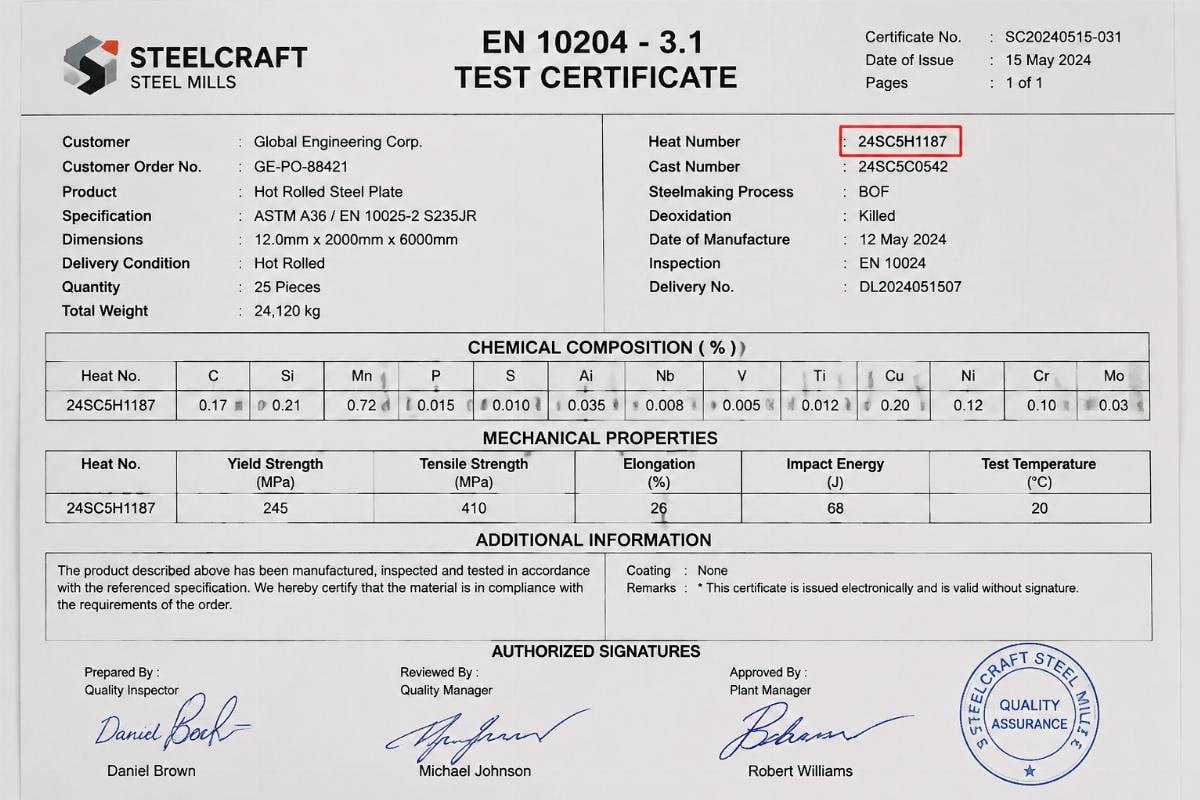
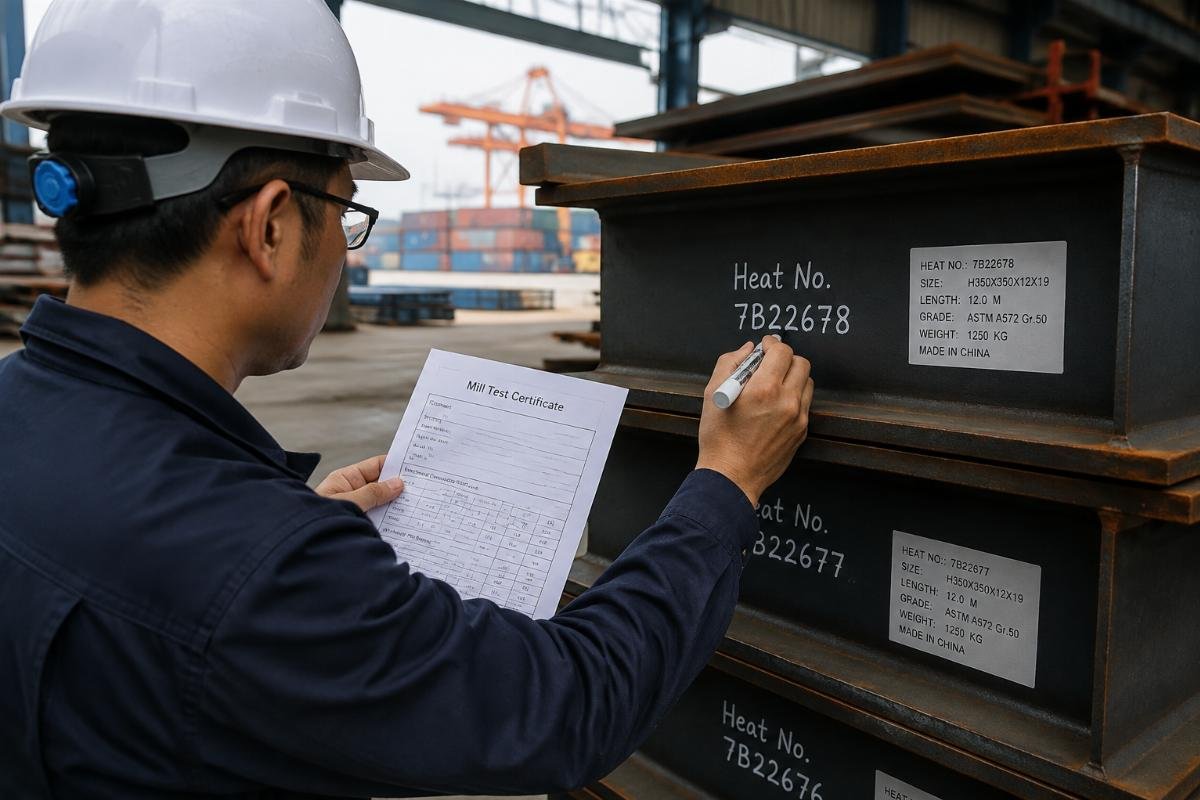
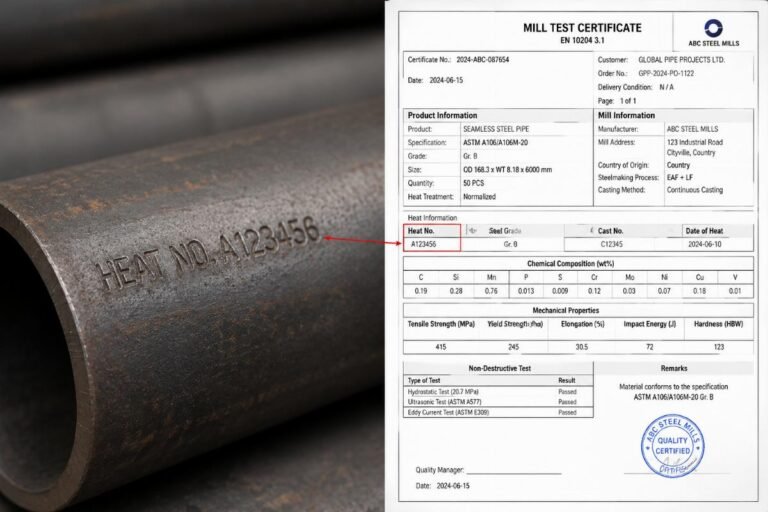
The most common reason for rejection is a mismatch in identification numbers. Every batch of steel produced has a unique heat number and batch number. These numbers must be stamped or tagged on the physical material and must match exactly with the numbers listed on the MTC. If a customs officer or a site inspector cannot verify that the steel in the container corresponds to the certificate provided, the shipment is flagged as non-compliant. [NEED_CITE: customs clearance protocols for steel imports]
In one instance involving a warehouse construction project in Southeast Asia, a distributor received a mixed container of square hollow sections. The packing list indicated one set of heat numbers, but the tags on the steel pipes showed different numbers. The local inspection agency refused to clear the goods until the discrepancy was resolved. This led to weeks of delay while the factory in China had to retrieve original production records and issue corrected documents. The time lost in resolving these documentation errors far outweighed the initial cost savings of choosing a cheaper supplier.
Another frequent issue is the omission of critical test data. For structural steel grades like S355JR or S355J2, impact test results are mandatory for certain applications. A certificate that lists chemical composition and tensile strength but omits impact energy values is incomplete for many international standards. Buyers often assume that a “Mill Certificate” is sufficient, but without the specific data points required by the destination country’s regulations, the document is worthless. [NEED_CITE: industry associations on steel import regulations]
To avoid these pitfalls, buyers must treat the MTC as a critical component of the product. It should be verified before shipment, not after arrival. A competent Mill Certificate Standards for Chinese Steel Export supplier will ensure that every document is cross-checked against physical markings and includes all necessary test results. This proactive approach prevents the logistical nightmares that can derail a project timeline.
What Is the Difference Between EN 10204 2.2 and 3.1 Certificates?
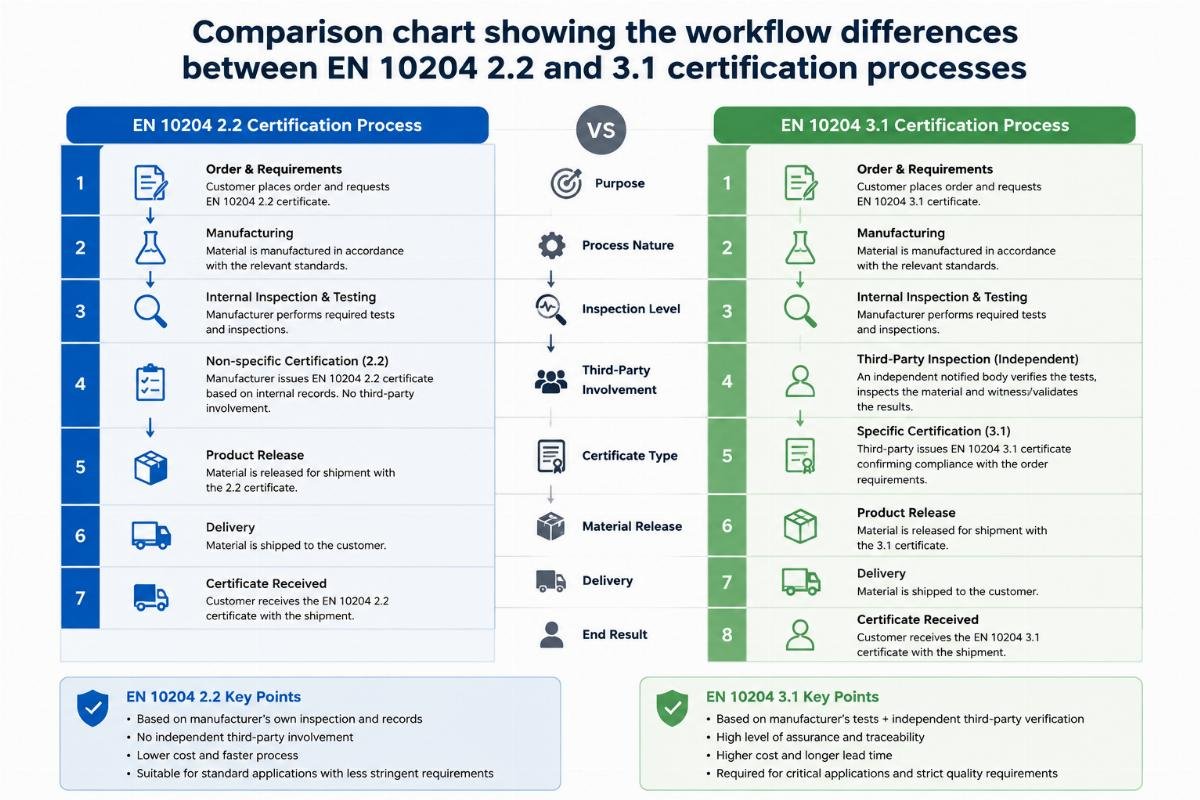
The key difference lies in the level of verification: EN 10204 2.2 is a self-declaration by the manufacturer, while EN 10204 3.1 requires independent verification by an authorized representative who is not part of the production department.
Many buyers mistakenly believe that any certificate issued by the steel mill is acceptable. However, for high-stakes structural projects, tenders often explicitly require EN 10204 3.1 certification. This standard ensures that the test results have been reviewed and signed off by an independent party, such as a quality assurance manager or a third-party inspector, who has no direct conflict of interest with the production team. [NEED_CITE: International Standards EN 10204 requirements]
Feature
EN 10204 2.2
EN 10204 3.1
Verification Level
Self-declared by manufacturer
Independently verified
Signatory Authority
Production or Quality Dept.
Independent Authorized Representative
Test Basis
Non-specific inspection
Specific tests on the delivered batch
Acceptance in Tenders
Low-risk applications
High-risk structural projects
Traceability
Basic batch tracking
Full heat-level traceability
In a case involving an industrial plant in Latin America, a trading company supplied steel plates with EN 10204 2.2 certificates. The third-party inspection agency hired by the end-user rejected the documents because the project specifications mandated independent verification. The buyer had to arrange for re-testing and re-certification, which incurred additional costs and delayed the construction schedule. This scenario highlights the necessity of understanding the specific certificate requirements before placing an order.
When sourcing from a Mill Certificate Standards for Chinese Steel Export supplier, always clarify whether the project requires 2.2 or 3.1 certification. Assuming that 2.2 is sufficient can lead to costly rejections. The 3.1 certificate provides a higher level of confidence because it involves an additional layer of scrutiny. This is particularly important for materials used in critical infrastructure, where failure is not an option.
The choice between these two standards should be based on the risk profile of the application. For general fabrication, 2.2 might be adequate. However, for structural frameworks, bridges, or pressure vessels, 3.1 is the industry norm. A professional supplier will be familiar with these distinctions and will provide the appropriate documentation without needing extensive prompting.
How to Verify the Authenticity of a Chinese Steel Mill Certificate?
Authenticity is verified by cross-checking the heat number, chemical composition, and mechanical test results against the physical marks on the steel and the manufacturer’s official records.
Verifying an MTC requires a systematic approach. First, check the heat number. This unique identifier links the certificate to the specific production batch. Ensure that the heat number on the certificate matches the tags or stamps on the steel products. If the numbers do not match, the certificate is invalid for that shipment. [NEED_CITE: step-by-step checklist for verifying Heat No. and Batch No.]
Next, review the chemical composition and mechanical properties. Compare the values listed on the certificate with the requirements of the specified steel grade. For example, if you ordered S355JR, the yield strength must meet the minimum requirement defined in the relevant standard. Look for any values that seem unusually high or low, as this could indicate data manipulation or testing errors.
In my early days of procurement, I encountered a certificate where the carbon content was listed below the minimum threshold for the specified grade. Upon investigation, it turned out that the factory had used a template from a different grade and failed to update the values. This error was caught only because I compared the data against the standard specifications. Such discrepancies are red flags that should prompt further investigation.
Another critical step is to verify the signatories. For an EN 10204 3.1 certificate, ensure that the signature belongs to an authorized representative who is independent of the production department. Some factories may attempt to bypass this requirement by having a production manager sign the document. This practice violates the standard and renders the certificate invalid for strict compliance projects.
Working with a reputable Mill Certificate Standards for Chinese Steel Export supplier simplifies this process. These suppliers maintain rigorous internal controls and have in-house laboratories that conduct regular testing. They understand the importance of accurate documentation and will provide certificates that withstand scrutiny from customs authorities and project consultants.
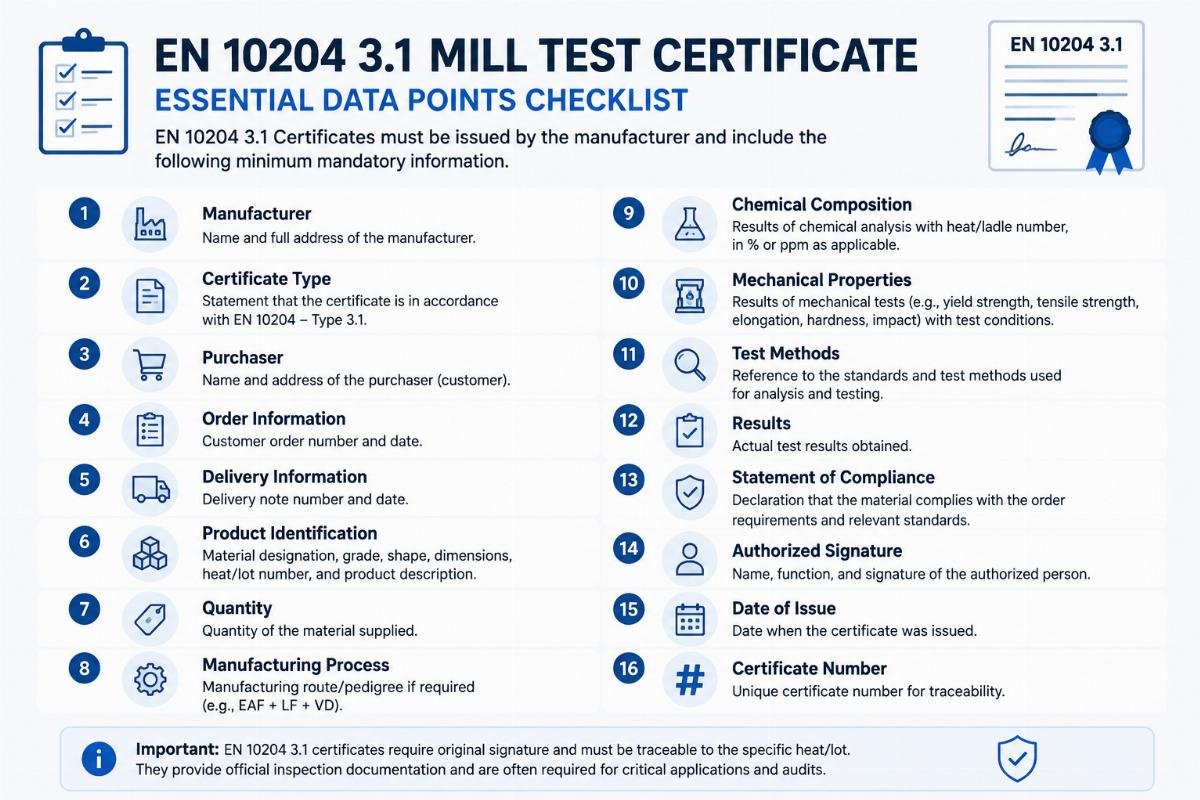
Which Specific Data Points Must Appear on a Compliant MTC?
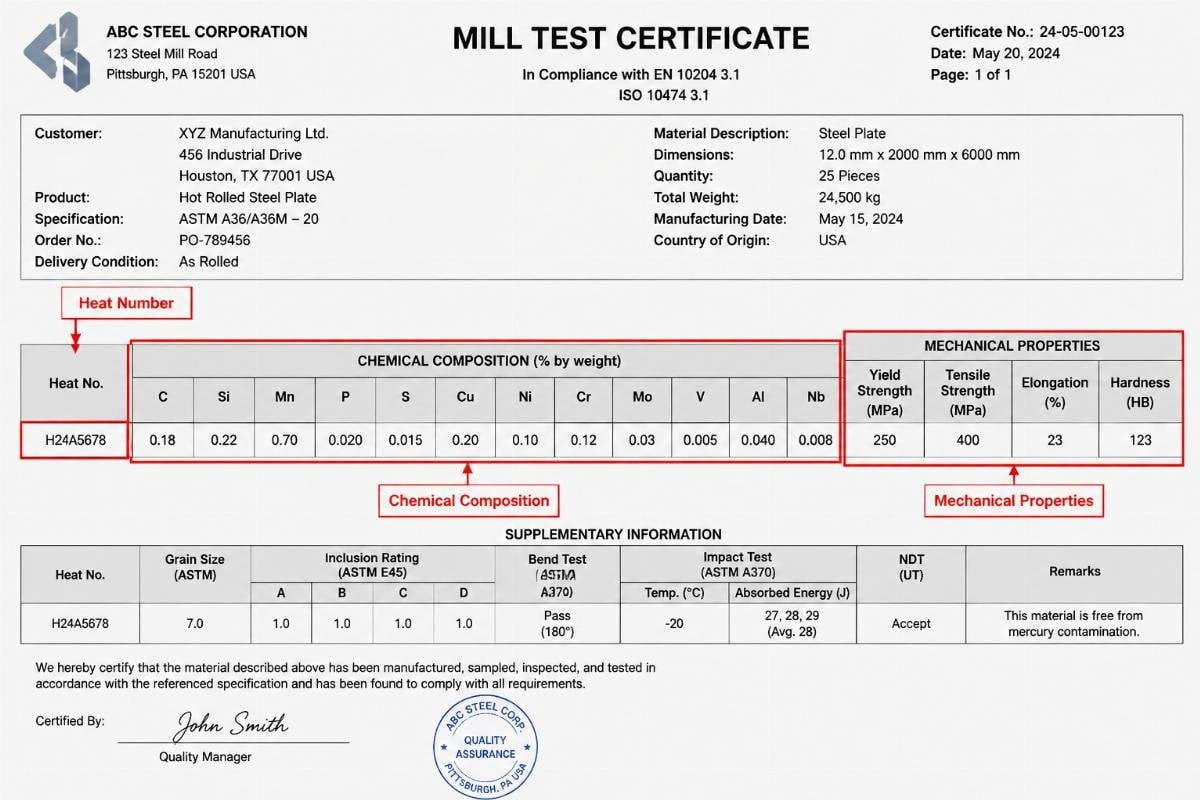
A compliant MTC must include the manufacturer’s name, product description, grade, dimensions, heat number, batch number, chemical composition, mechanical properties, impact test results, and authorized signatures.
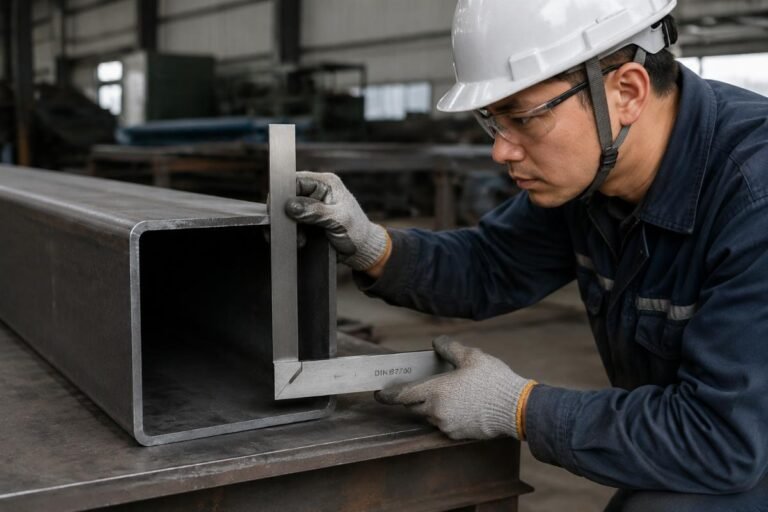
Missing any of these elements can lead to rejection. The manufacturer’s name and address establish the source of the material. The product description and grade confirm that the correct material was supplied. Dimensions are necessary to verify that the physical products match the order specifications.
The heat number and batch number are crucial for traceability. They allow you to track the material back to its production origin. Chemical composition details, including carbon, manganese, silicon, and other alloying elements, must be listed with their actual values. Mechanical properties, such as yield strength, tensile strength, and elongation, provide evidence of the material’s performance capabilities.
For many structural applications, impact test results are mandatory. These values indicate the material’s toughness and ability to withstand sudden loads. A certificate that omits impact energy data is incomplete for grades like S355J2 or similar low-temperature steels. [NEED_CITE: common red flags in Chinese steel MTCs]
Required Data Point
Purpose
Manufacturer Details
Identifies the source
Grade & Standard
Confirms material specification
Heat & Batch Numbers
Ensures traceability
Chemical Composition
Verifies alloy content
Mechanical Properties
Confirms strength and ductility
Impact Test Results
Validates toughness
Authorized Signatures
Proves independent verification
In a scenario involving a Middle East infrastructure project, a shipment was delayed because the MTC lacked impact test data. The监理 (supervisor) insisted on seeing these values before allowing the steel to be used in the structure. The absence of this data caused a standoff that lasted for several weeks. This incident underscores the importance of ensuring that all required data points are present on the certificate before shipment.
Buyers should use a checklist to review each MTC. This simple tool can prevent oversights and ensure that the documentation meets all regulatory and project requirements. A thorough review process is the best defense against customs delays and project rejections.
How Can Buyers Ensure Smooth Clearance with Proper Documentation?
Smooth clearance is achieved by pre-shipment verification of documents, working with certified manufacturers, and ensuring that all certificates align with the destination country’s import regulations.
Pre-shipment verification is the most effective strategy. Before the goods leave the factory, request digital copies of the MTCs. Review them carefully against the order specifications and the project requirements. Check for consistency in heat numbers, grades, and test results. If any discrepancies are found, address them immediately with the supplier. This proactive approach prevents issues from arising at the port of destination.
Working with a certified manufacturer is also crucial. Manufacturers with in-house laboratories and strict quality control systems are more likely to produce accurate and compliant documentation. They understand the nuances of international standards and can provide certificates that meet specific project needs. For instance, Xin Jiyuan maintains rigorous adherence to EN10219 and EN10210 standards, ensuring that every exported batch comes with fully compliant, verifiable 3.1 certificates. This commitment to quality reduces the risk of documentation errors and facilitates smoother customs clearance.
Additionally, buyers should familiarize themselves with the import regulations of the destination country. Some countries have specific requirements for steel imports, such as mandatory third-party inspections or specific certificate formats. Understanding these requirements in advance allows buyers to communicate clearly with their suppliers and ensure that all necessary documentation is prepared correctly.
By focusing on these strategies, buyers can minimize the risk of customs delays and project disruptions. The goal is to ensure that the steel arrives at the site ready for use, with all paperwork in order. This level of preparation is essential for maintaining project timelines and controlling costs. A reliable Mill Certificate Standards for Chinese Steel Export supplier will partner with you to achieve this goal, providing the documentation and support needed for successful project execution.
Conclusion
Compliant documentation is the backbone of successful steel procurement.
Understanding the nuances of EN 10204 3.1 certificates and verifying data points like heat numbers and impact tests prevents costly delays. By prioritizing accurate documentation and working with certified suppliers, buyers ensure material integrity and smooth project execution.
Editor covering global sourcing, supplier verification, and industrial product knowledge. Content is compiled from manufacturer specifications, industry standards, and hands-on experience with international B2B buyers. Every article is fact-checked before publishing to help procurement professionals make informed decisions.



Discussion
0 Comments