Custom S355JR Steel for Heavy Machinery Frames | Wholesale Manufacturer
Selecting Custom S355JR Steel for Heavy Machinery Frames demands precise impact toughness alignment to prevent brittle fracture in cold environments. Upgrade to J0 or J2 grades based on operating temp...
Custom S355JR Steel for Heavy Machinery Frames | Technical Selection Guide
S355JR is not a universal solution for heavy machinery frames.
Selecting the correct grade of structural steel requires more than matching the yield strength; it demands precise alignment of impact toughness with operating temperatures and custom dimensional tolerance to prevent welding cracks and structural fatigue. For procurement managers and engineers in heavy machinery manufacturing, specifying Custom S355JR Steel for Heavy Machinery Frames involves verifying Charpy V-notch impact energy values at specific temperatures, assessing carbon equivalent values for weldability, and defining non-standard cutting tolerances to minimize on-site fabrication waste.
The assumption that standard structural steel grades are interchangeable often leads to costly failures in the field. In my early days handling steel exports from Jinan, I learned that the suffix letters in EN 10025 standards are not merely administrative details but critical indicators of material behavior under stress. A mismatch between the specified grade and the actual environmental conditions can result in brittle fracture, particularly in welded joints where residual stresses are high. This guide breaks down the technical nuances of selecting Custom S355JR Steel for Heavy Machinery Frames, drawing from real-world fabrication challenges and international standards compliance.
Why Standard S355JR Often Fails in Heavy Machinery Frames?
The primary cause of failure is not insufficient strength, but inadequate impact toughness at low operating temperatures.
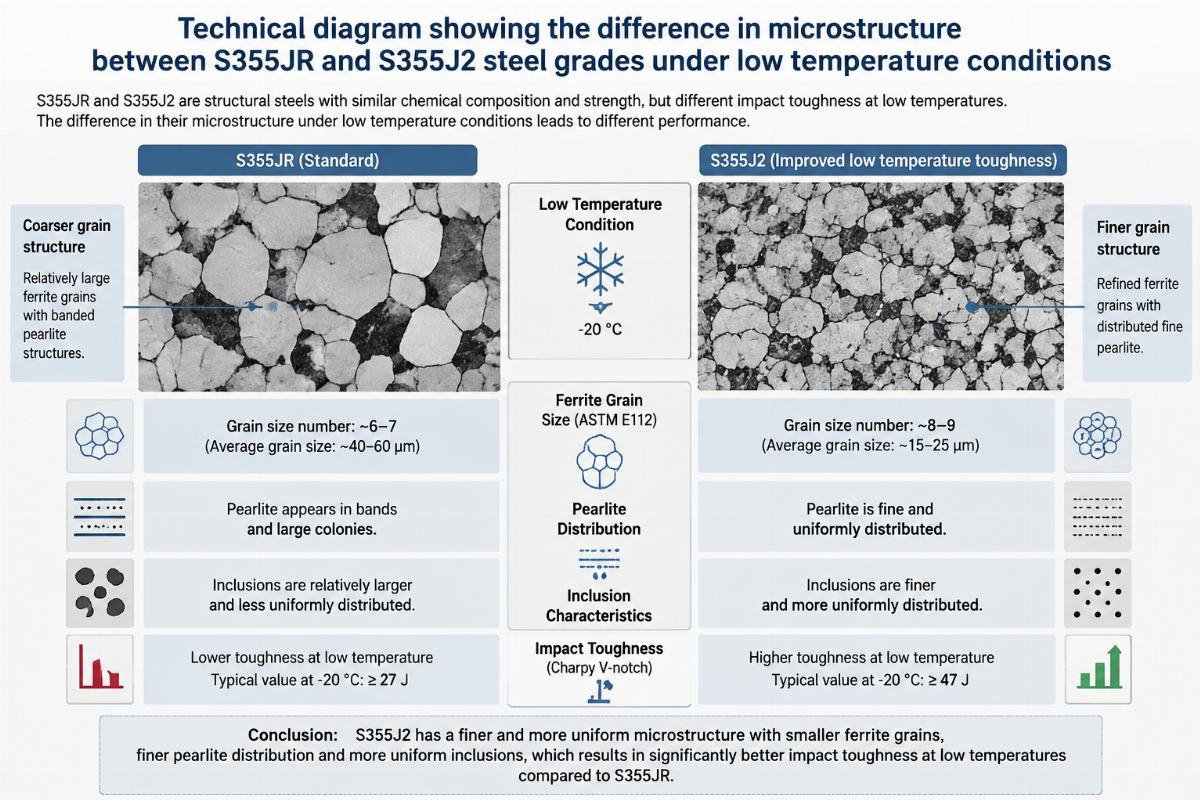
S355JR is a widely used non-alloy quality structural steel, defined by its minimum yield strength of 355 MPa. However, the “JR” designation indicates that the material has been tested for impact energy at room temperature (20°C). [NEED_CITE: EN 10025-2 standard requirements for impact testing temperatures] For heavy machinery operating in outdoor environments, such as mining equipment in high-altitude regions or construction cranes in northern climates, night-time temperatures can drop significantly below zero. When the ambient temperature falls below the material’s transition temperature, the steel shifts from ductile to brittle behavior.
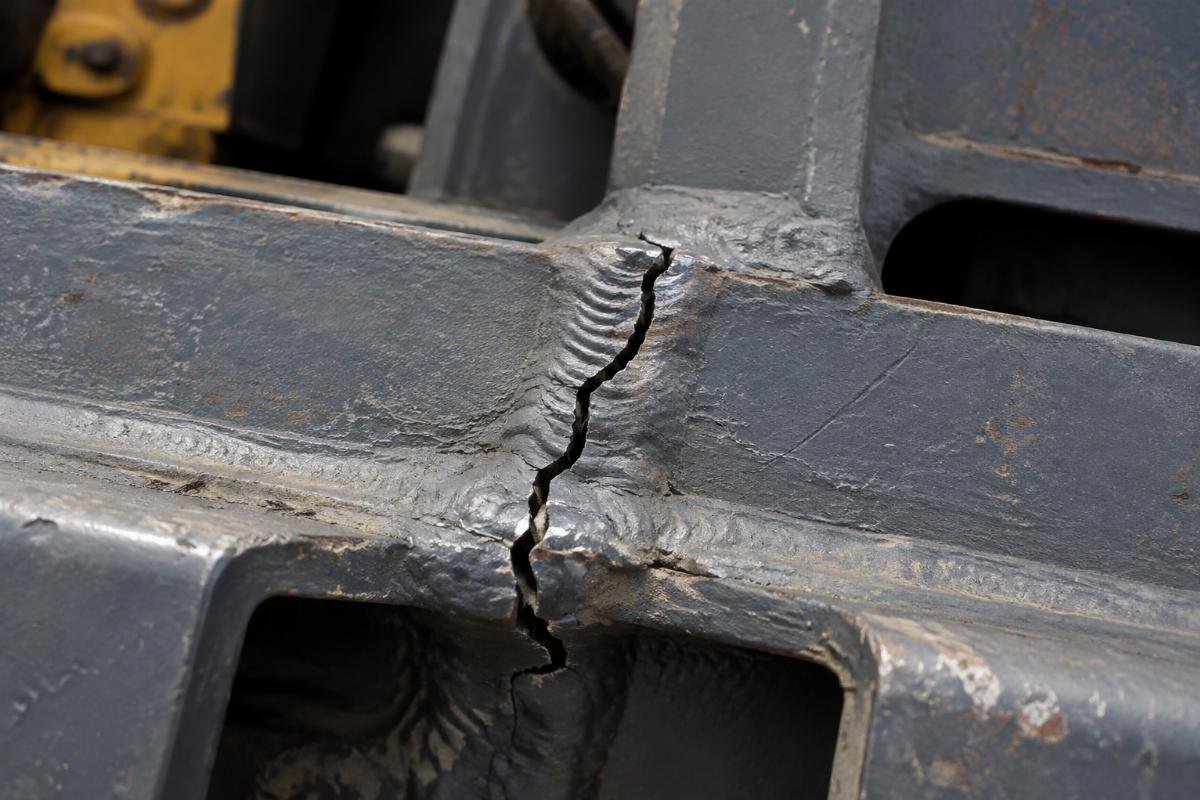
I recall a specific case involving a buyer from the Middle East who ordered standard S355JR profiles for a fleet of mining dump trucks. The initial design specifications did not account for the drastic temperature drop in desert regions during night shifts, which can reach sub-zero levels in certain seasons. The frames were fabricated and welded without preheating, assuming the base material was robust enough. Within months, multiple units developed hairline cracks originating from the weld heat-affected zones. Upon investigation, it was clear that the JR grade lacked the necessary toughness to withstand the thermal shock and dynamic loading at those lower temperatures. The cost of rework, including cutting out defective sections and rewelding with higher-grade filler materials, far exceeded the initial savings of choosing the basic grade.
This experience highlights a critical gap in many procurement processes: the tendency to view steel as a commodity rather than a engineered component. When sourcing Custom S355JR Steel for Heavy Machinery Frames, buyers must evaluate the entire lifecycle of the machinery, including storage, transportation, and operational environments. If the equipment will ever be exposed to temperatures below 20°C, especially during welding or initial service, upgrading to J0 or J2 grades is not an optional extra but a technical necessity.
How to Specify the Right Grade for Your Climate?
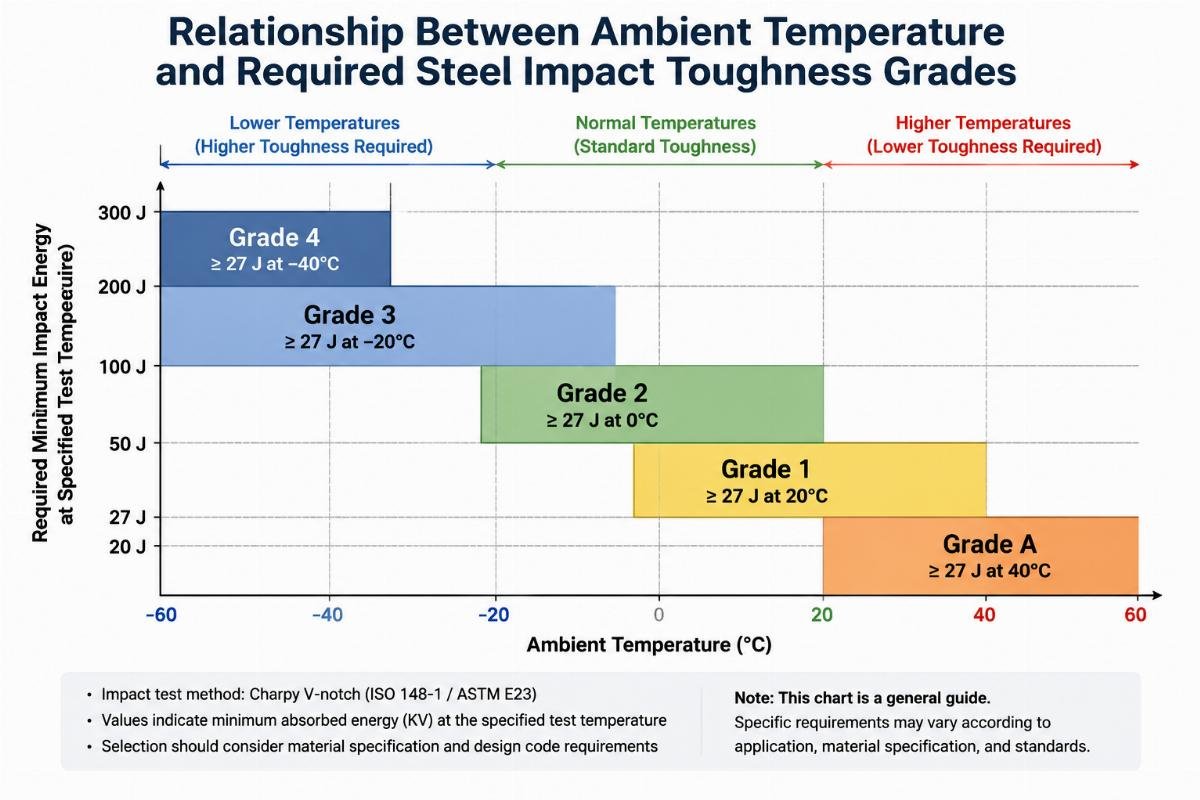
Map ambient temperature ranges to JR, J0, or J2 grades using EN 10025 guidelines to ensure structural integrity.
The European standard EN 10025 categorizes non-alloy structural steels based on their impact energy properties at different temperatures. Understanding these distinctions is vital for specifying Custom S355JR Steel for Heavy Machinery Frames correctly. The suffixes indicate the minimum temperature at which the material must achieve a specific impact energy value, typically 27 Joules for longitudinal specimens.
Grade
Impact Test Temperature
Typical Application Environment
Weldability Consideration
S355JR
+20°C
Indoor structures, mild climates
Standard preheat may be required for thick sections
S355J0
0°C
Outdoor machinery in temperate zones
Improved toughness reduces crack risk
S355J2
-20°C
Cold climate operations, mining, offshore
Superior resistance to brittle fracture
S355K2
-20°C
Critical structural components
Enhanced quality control and testing
[NEED_CITE: Comparison of impact energy requirements for S355 subgrades]
For heavy machinery manufacturers, the choice often hinges on the worst-case scenario rather than the average condition. A machine operating in Southeast Asia might seem safe with JR grade, but if it is shipped through colder regions or stored outdoors in winter before commissioning, the risk remains. In contrast, equipment destined for Northern Europe, Canada, or high-altitude mining sites in South America requires J2 or even K2 grades to guarantee performance.
From a fabrication perspective, higher toughness grades also offer better weldability. The carbon equivalent value (CEV) is a key parameter here. While S355JR and S355J2 have similar chemical compositions, the production process for J2 involves stricter control over impurities and grain structure, which enhances both toughness and weld integrity. [NEED_CITE: Relationship between CEV and weldability in structural steels] When requesting Custom S355JR Steel for Heavy Machinery Frames, always clarify whether the “JR” specification is a placeholder for a higher grade if the end-use environment dictates it. Many suppliers, including those in Shandong, can provide J0 or J2 materials under the same structural profile dimensions, ensuring that the mechanical properties match the operational demands.
The Hidden Cost of Standard Sizes in Custom Fabrication?
Custom near-net-size cutting reduces welding filler consumption and labor costs, often lowering total project cost.
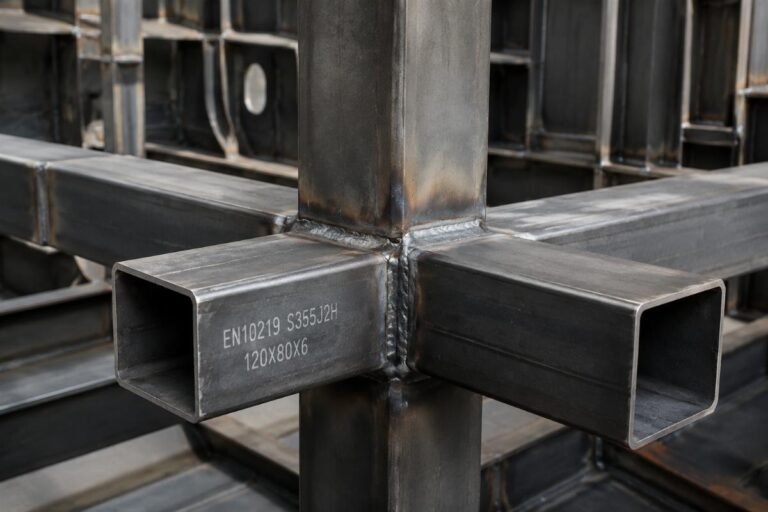
A common misconception among buyers is that purchasing standard-length beams and plates is the most economical approach. In reality, standard sizes often lead to significant material waste and increased fabrication time. For complex heavy machinery frames, which involve intricate joints and non-uniform load paths, standard H-beams or plates require extensive cutting, fitting, and welding on the shop floor. This not only generates scrap but also introduces distortion due to excessive heat input during welding.
I once worked with a fabricator who struggled with standard H-beam tolerances for a series of complex frame joints. The misalignment required significant grinding and re-welding to achieve the necessary fit-up, delaying the production schedule and increasing labor hours. By switching to custom-cut components with precise dimensional tolerances, the same fabricator reduced on-site welding time noticeably. The key lies in specifying tight tolerance classes for custom-cut structural components. [NEED_CITE: ISO tolerance classes for structural steel cutting]
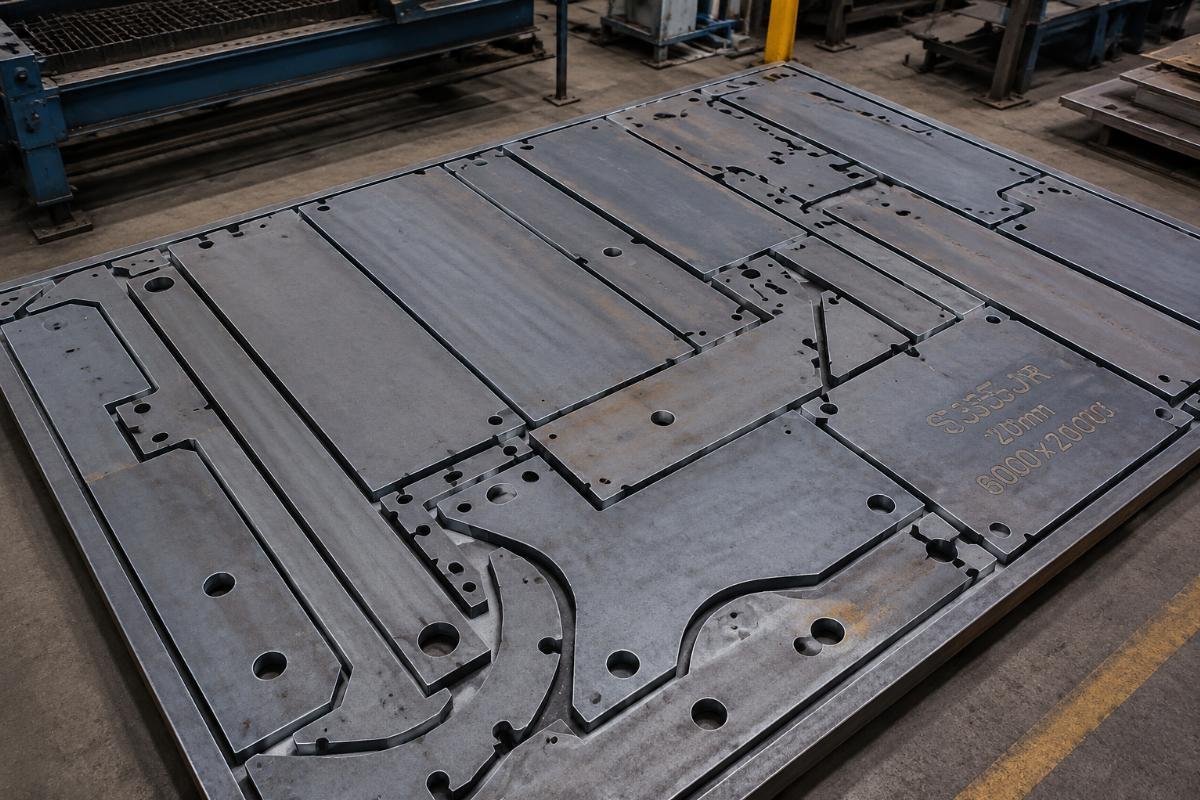
When ordering Custom S355JR Steel for Heavy Machinery Frames, consider requesting near-net-size cutting. This means the steel is cut to the exact dimensions required for assembly, minimizing the need for secondary machining. Suppliers with advanced plasma or laser cutting capabilities can achieve precision within millimeters, ensuring that parts fit together seamlessly. This approach reduces the amount of welding filler material needed, lowers the risk of distortion, and speeds up the overall assembly process.
Furthermore, custom sizing allows for optimized nesting of parts from raw plates, reducing material waste. For large-scale projects, this efficiency translates into substantial cost savings, offsetting the slightly higher unit price of custom-cut steel. It is a shift from viewing steel as a raw material to treating it as a semi-finished component, ready for immediate integration into the final product.
Ensuring Structural Integrity Through Surface Treatment?
Proper shot blasting and coating are critical for machinery exposed to harsh environments.
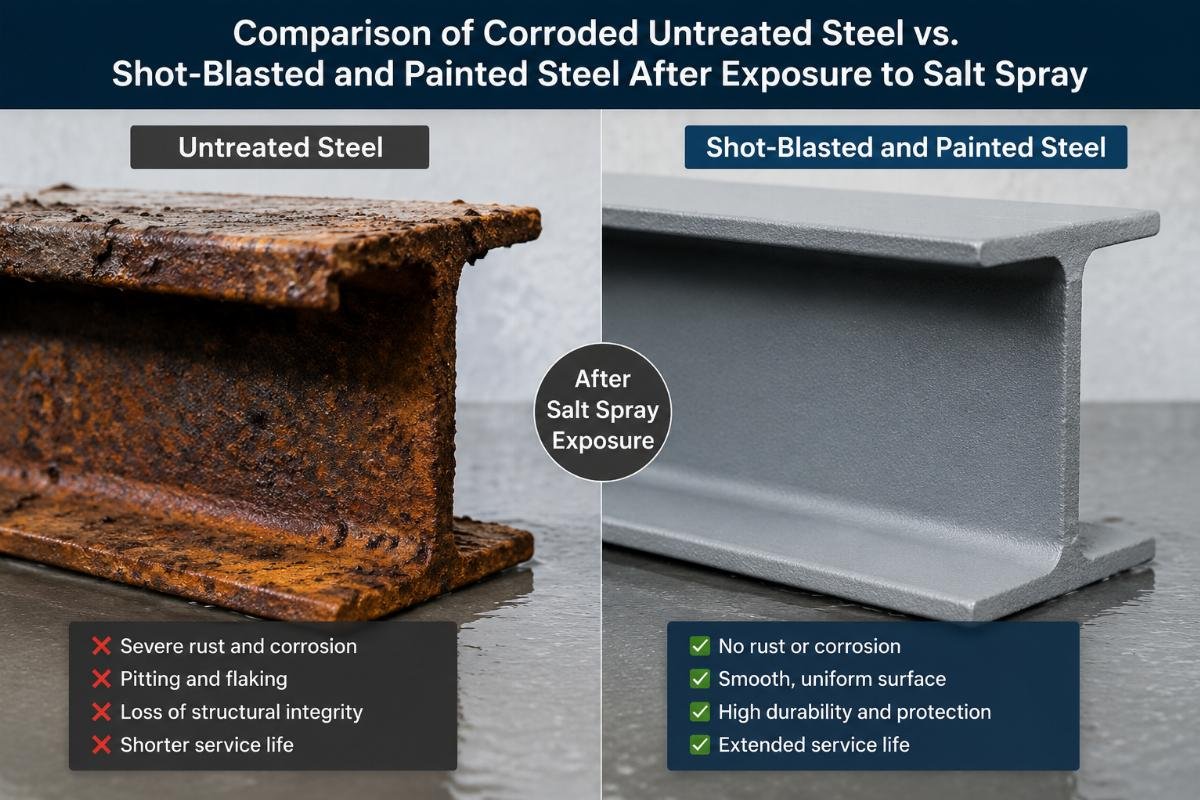
Even the highest grade of steel will fail prematurely if not protected against corrosion. Heavy machinery often operates in aggressive environments, such as coastal ports, mining sites with acidic dust, or chemical plants. Without adequate surface treatment, rust can penetrate the steel matrix, leading to pitting and reduced structural cross-section over time. This is particularly dangerous for welded joints, where corrosion can initiate cracks under cyclic loading.
The standard practice for protecting structural steel involves shot blasting to remove mill scale and rust, followed by the application of a protective coating system. Shot blasting creates a rough surface profile that enhances the adhesion of primers and paints. [NEED_CITE: Surface preparation standards for structural steel] For Custom S355JR Steel for Heavy Machinery Frames, the surface treatment specification should be aligned with the expected service life and environmental exposure category.
In a previous project involving machinery exported to a coastal region, the buyer opted for untreated steel to save costs. Within a year, the frames showed significant surface rust, particularly around bolt holes and weld seams. The subsequent maintenance required extensive sandblasting and repainting, costing several times the initial savings. In contrast, a similar batch treated with shot blasting and a two-part epoxy primer remained in excellent condition after years of service.
When specifying surface treatment, consider the following options:
Shot Blasting: Essential for removing contaminants and preparing the surface for painting.
Epoxy Priming: Provides a robust barrier against moisture and chemicals.
Galvanizing: Offers superior long-term protection for smaller components but may not be feasible for large welded frames due to size constraints and distortion risks.
Integrating surface treatment into the initial procurement plan ensures that the Custom S355JR Steel for Heavy Machinery Frames arrives ready for assembly or immediate use, reducing downstream processing costs and enhancing the longevity of the final product.
Conclusion
Correct material selection prevents costly failures in heavy machinery manufacturing.
Choosing the right steel grade involves balancing impact toughness, weldability, and dimensional precision. By understanding the limitations of S355JR and considering upgrades to J0 or J2 for cold environments, manufacturers can avoid brittle fracture risks. Additionally, opting for custom-cut dimensions and proper surface treatment reduces fabrication waste and enhances durability. These technical considerations ensure that Custom S355JR Steel for Heavy Machinery Frames delivers reliable performance throughout its service life.
Editor covering global sourcing, supplier verification, and industrial product knowledge. Content is compiled from manufacturer specifications, industry standards, and hands-on experience with international B2B buyers. Every article is fact-checked before publishing to help procurement professionals make informed decisions.


Discussion
0 Comments