EN10219/10 OEM Structural Steel PPAP Docs from Manufacturer
Prevent port rejections with our guide to PPAP documentation for structural steel, ensuring full EN10219 compliance. Learn why Mill Test Certificates alone are insufficient and how to verify heat numb...
EN10219/10 OEM Structural Steel PPAP Docs from Manufacturer
A Mill Test Certificate alone is not proof of compliance.
For custom structural steel OEM orders, PPAP documentation for structural steel is not a single automotive-style form but a rigorous traceability package comprising EN10204 3.1/3.2 Mill Test Certificates, Welding Procedure Specifications, First Article Inspection dimensional reports, and heat treatment logs that must physically match the heat numbers stamped on the steel. Missing or mismatched data in this package is the primary cause of port rejections and customs delays for EN-standard exports.
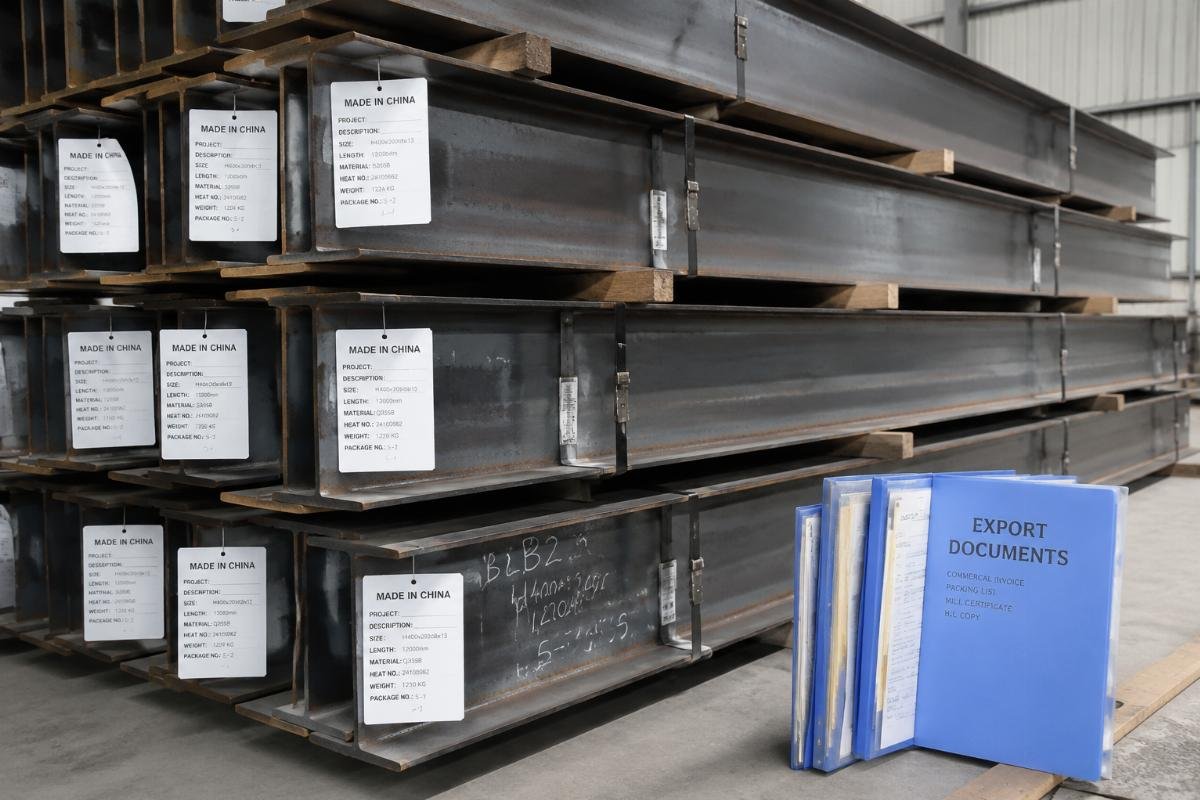
I still remember the silence on the phone when the logistics manager in Dubai told me the container was sitting at Jebel Ali Port, untouched. The issue was not the quality of the S355J2 rectangular tubes inside. The issue was a discrepancy between the heat treatment curve attached to the digital file and the actual furnace log number printed on the physical bundle tags. The client’s QC team, adhering strictly to EN10219-1 delivery clauses, rejected the entire shipment because the traceability chain was broken. That incident shifted my focus from merely checking chemical composition to auditing the entire document trail. In structural steel exports, paperwork is not administrative overhead; it is the legal definition of the product’s identity.
Understanding why these documents matter requires looking beyond the steel itself. The physical material is only half the transaction. The other half is the verifiable proof that the material meets the specific engineering requirements of the destination market. Without this proof, even high-grade steel is treated as scrap by customs authorities and project engineers.
What Does PPAP Mean for Structural Steel Exports?
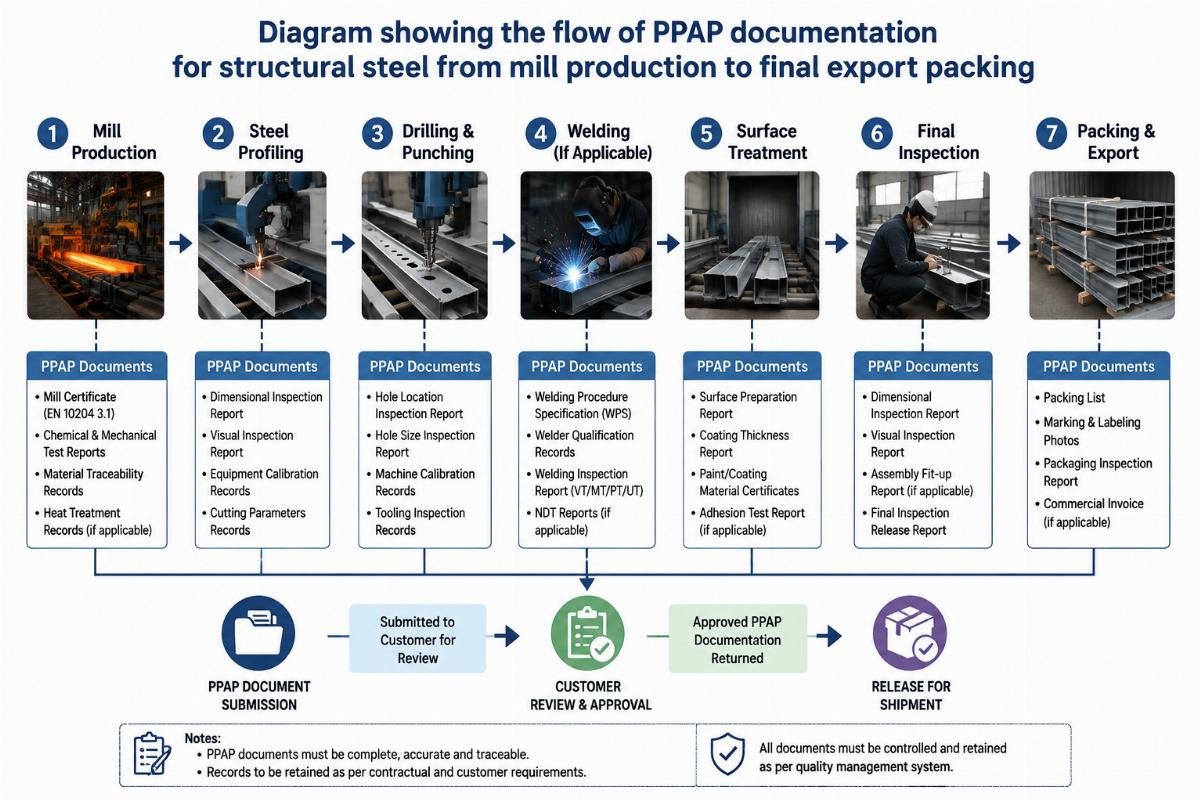
In the automotive industry, Production Part Approval Process (PPAP) is a standardized set of forms. In structural steel manufacturing, especially for OEM orders involving beams, pipes, and plates, the concept translates to material traceability and process validation. Buyers often request PPAP documentation for structural steel expecting a simple checklist, but they actually need a cohesive narrative that links raw material input to finished product output.
The core difference lies in the scale and customization. A standard beam might only require a basic certificate. However, a custom-cut H-beam for a bridge component requires proof that the cutting process did not alter the mechanical properties near the edges. This is where the documentation becomes critical. It must demonstrate that every step, from rolling to welding to surface treatment, was controlled and recorded.
Many procurement managers assume that meeting the EN10219 standard is automatic if the steel grade is correct. This is a dangerous misconception. The standard defines the technical requirements, but the documentation proves adherence. For example, a batch of S355J2 steel might have the correct yield strength, but if the impact test temperature records are missing or ambiguous, the material cannot be certified for low-temperature applications in Northern Europe. The documentation must explicitly state the testing conditions and results, linked directly to the specific batch produced.
This traceability is not just for compliance. It is for liability. If a structural failure occurs years later, the PPAP documentation for structural steel serves as the primary evidence that the manufacturer followed all specified procedures. Without it, the manufacturer has no defense. Therefore, the documentation must be treated with the same rigor as the physical production process.
Which Documents Are Non-Negotiable for EN10219/EN10210 Compliance?
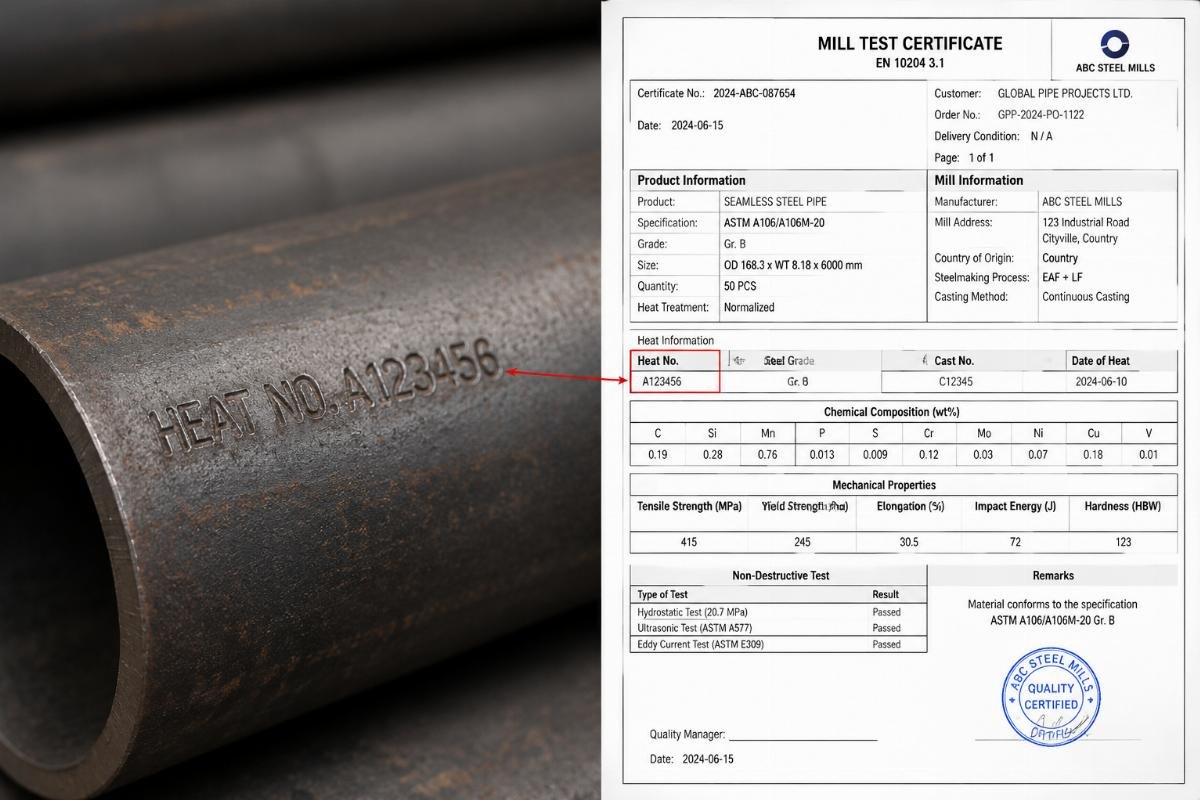
When preparing an export package, certain documents are mandatory. These are not optional extras; they are the foundation of the transaction. The most critical is the Mill Test Certificate (MTC), specifically EN10204 Type 3.1 or 3.2, depending on the buyer’s requirement. This certificate must include chemical composition, mechanical properties, and impact test results. [NEED_CITE: EN10204 standard requirements for inspection documents]
However, the MTC is often insufficient on its own. For welded structural components, the Welding Procedure Specification (WPS) and Procedure Qualification Record (PQR) are essential. These documents prove that the welding parameters used during production were tested and approved. If the WPS does not align with the actual welder qualifications, the entire batch may be deemed non-compliant. [NEED_CITE: ISO 15614 standard for welding procedure qualification]
Additionally, for custom OEM orders, a First Article Inspection (FAI) dimensional report is crucial. Standard tolerances may not apply to non-standard cuts or complex shapes. The FAI report provides detailed measurements of the first piece produced, ensuring that the manufacturing setup is correct before full-scale production begins. This prevents massive rework costs later in the process.
Document Type
Purpose
Verification Level
Mill Test Certificate (EN10204 3.1)
Proves chemical and mechanical properties
Independent inspector or manufacturer’s authorized representative
Welding Procedure Specification (WPS)
Defines approved welding parameters
Internal quality control and third-party audit
First Article Inspection (FAI) Report
Validates dimensional accuracy of custom cuts
Buyer’s QC team or independent surveyor
Heat Treatment Log
Records time-temperature curves for normalization
Manufacturer’s internal laboratory records
A common error is treating these documents as static files. In reality, they are dynamic records. For instance, if a batch undergoes post-weld heat treatment, the heat treatment log must be included. This log should show the exact temperature profile over time, matching the requirements of the relevant standard. Without this, the mechanical properties claimed in the MTC cannot be verified.
Buyers should also request a Surface Treatment Log if the steel is painted or galvanized. This log details the preparation method, coating thickness, and adhesion test results. Corrosion protection is vital for structural integrity, and the documentation must prove that the coating meets the specified durability standards. [NEED_CITE: ISO 12944 standard for corrosion protection of steel structures]
How to Verify Heat Number Traceability Before Shipment?
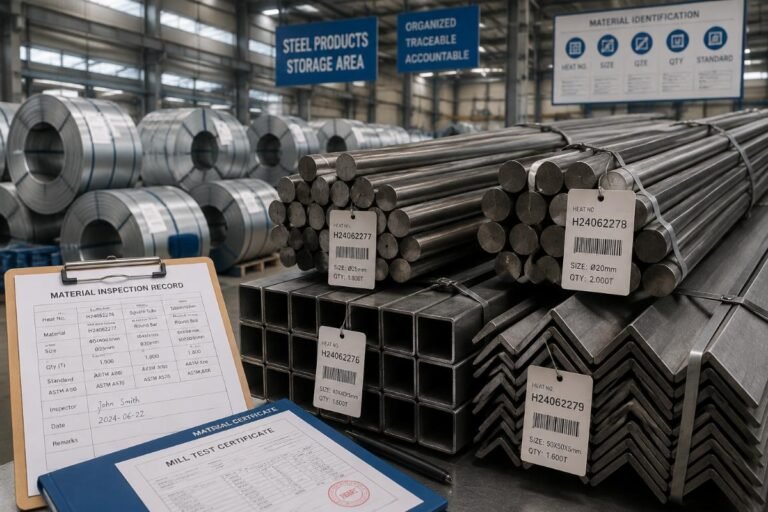
Traceability is the backbone of PPAP documentation for structural steel. It ensures that the physical product matches the documented test results. The primary link is the heat number. This unique identifier is stamped on the steel and recorded in the MTC. Verifying this link is a critical step before shipment.
The process begins at the mill. Each batch of steel is assigned a heat number based on the ladle analysis. This number follows the material through rolling, cutting, and welding. At each stage, the number must be transferred to the new form or recorded in the production log. If the number is lost or misrecorded, the traceability chain is broken.
To verify traceability, buyers should perform a cross-reference check. Compare the heat number on the physical steel marks with the number on the MTC and the packing list. They must match exactly. Any discrepancy, even a single digit, indicates a potential mix-up. In such cases, the material should be quarantined until the issue is resolved.
A practical method is to request a photo verification before loading. Ask the supplier to send clear images of the steel bundles showing the heat number stamps alongside the packing list. This allows for remote verification and catches errors early. Additionally, some manufacturers use digital tracking systems that allow buyers to scan a QR code on the bundle to access the full document history. This technology enhances transparency and reduces the risk of human error.
It is also important to check the consistency of the heat number across all related documents. The WPS, PQR, and FAI reports should all reference the same heat number or batch ID. If one document references a different batch, it suggests that the documentation was copied from a previous order without proper updating. This is a red flag that requires immediate investigation.
Common Documentation Errors That Cause Customs Delays?
Even with perfect steel quality, documentation errors can halt shipments at the border. Customs officials rely on these documents to classify goods and assess duties. Inaccurate or incomplete paperwork leads to delays, fines, and sometimes seizure of the cargo. Understanding common pitfalls helps prevent these issues.
One frequent error is mismatched dates. The date on the MTC must be consistent with the production date and the shipping date. If the MTC is dated after the shipping date, it raises suspicions of fraud. Similarly, the signature on the certificate must be valid and from an authorized person. An unsigned or digitally altered signature can invalidate the entire document. [NEED_CITE: International chamber of commerce guidelines on trade document authenticity]
Another common issue is vague descriptions. The product description on the packing list must match the description on the MTC and the commercial invoice. Using generic terms like “steel pipes” instead of specific grades and dimensions can lead to classification errors. Customs officers may reclassify the goods, resulting in higher duties or additional inspections.
Error Type
Consequence
Prevention Strategy
Mismatched Heat Numbers
Rejection at port, full container return
Cross-reference physical marks with MTC and packing list
Missing Signatures
Document invalidation, customs hold
Ensure all certificates are signed by authorized personnel
Vague Product Descriptions
Reclassification, duty disputes
Use precise technical descriptions matching MTC
Inconsistent Dates
Suspicion of fraud, extended inspection
Align production, testing, and shipping dates logically
A case from Southeast Asia illustrates this point. A shipment of non-standard H-beams was delayed for weeks because the dimensional tolerance report was missing from the package. The local customs authority required proof that the beams met the specified tolerances for structural use. Without the report, the goods could not be cleared. The delay cost the buyer significant storage fees and project downtime.
To avoid such issues, buyers should implement a pre-shipment verification process. Review all documents against the purchase order and relevant standards before the goods leave the factory. Check for completeness, accuracy, and consistency. If any document is missing or unclear, request clarification immediately. Do not wait until the goods arrive at the destination port.
Furthermore, ensure that the PPAP documentation for structural steel is organized logically. Group related documents together, such as placing the MTC next to the heat treatment log. This makes it easier for customs officials and QC inspectors to review the package efficiently. A well-organized document set reflects professionalism and reduces the likelihood of oversight.
Conclusion
Documentation is the invisible structure of your steel supply chain.
Successful export of custom structural steel relies on more than just material quality; it demands impeccable PPAP documentation for structural steel that ensures full traceability and compliance. By prioritizing accurate MTCs, validated welding procedures, and rigorous heat number verification, buyers can mitigate the risks of customs delays and project failures. Treat every document as a critical component of the product, verifying its accuracy with the same diligence applied to the steel itself.
Editor covering global sourcing, supplier verification, and industrial product knowledge. Content is compiled from manufacturer specifications, industry standards, and hands-on experience with international B2B buyers. Every article is fact-checked before publishing to help procurement professionals make informed decisions.





Discussion
0 Comments