Description
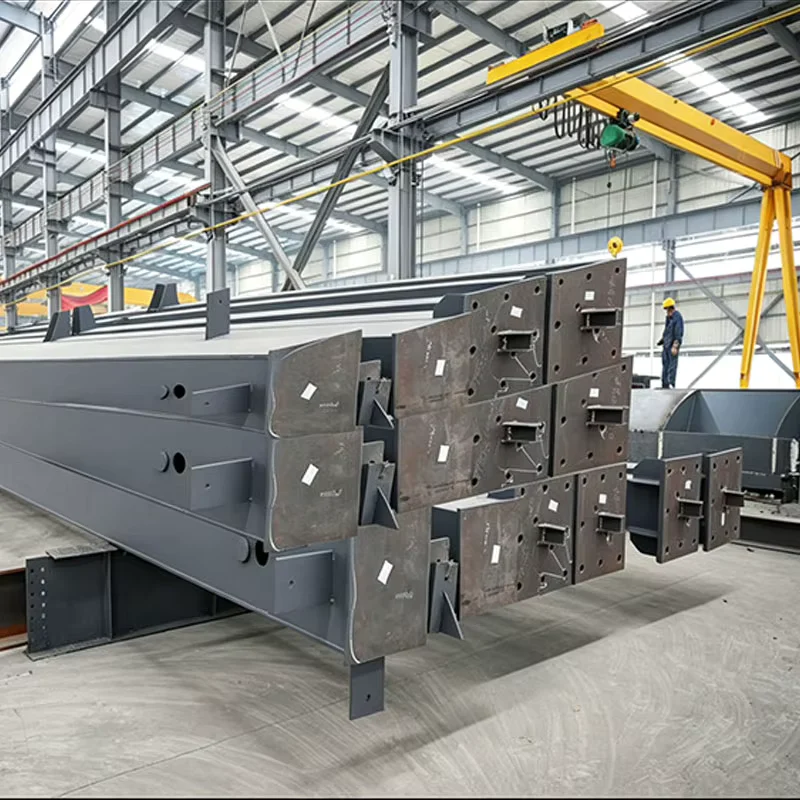
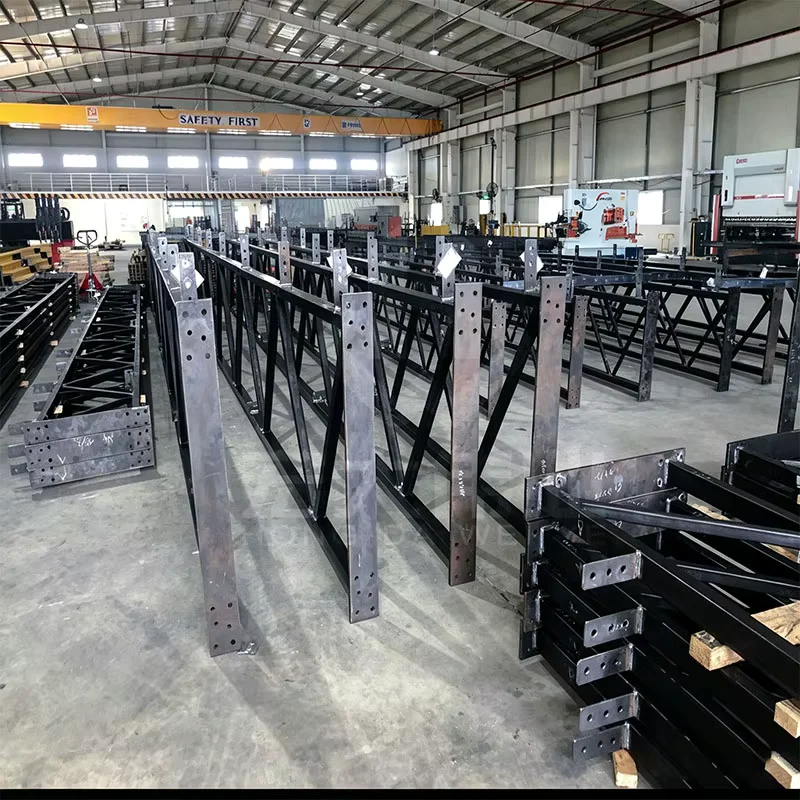
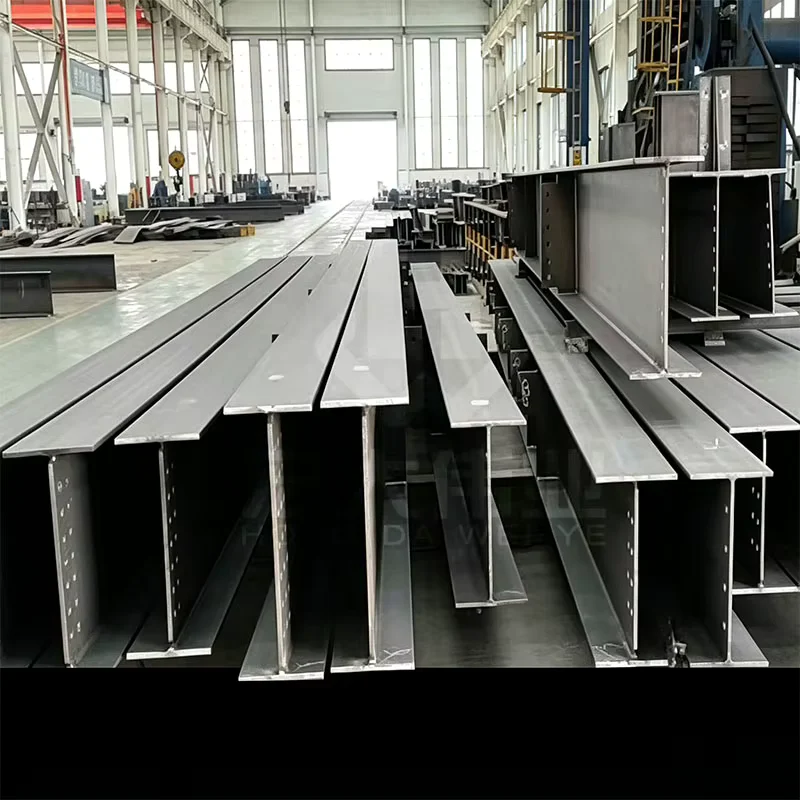
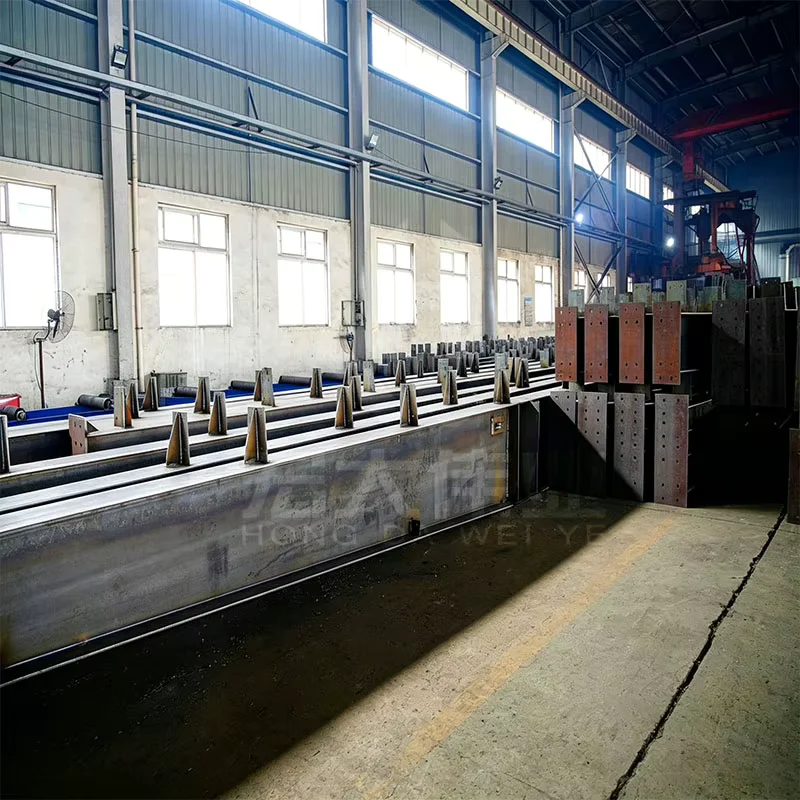
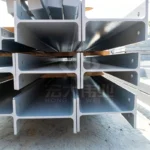
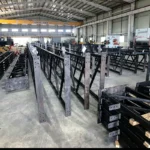
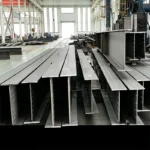
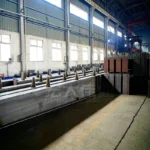
Factory-Direct Structural Fabrication — Every H-beam frame and C/Z purlin is welded, cut, and drilled in-house across three production lines, eliminating middleman markups for warehouse and workshop projects.
Technical Specifications
| Parameter | Value |
|---|---|
| Designation | Q235B/Q345B Fabricated Steel Structure |
| Product Type | Fabricated Steel Structure |
| Steel Grade | Q235B, Q345B |
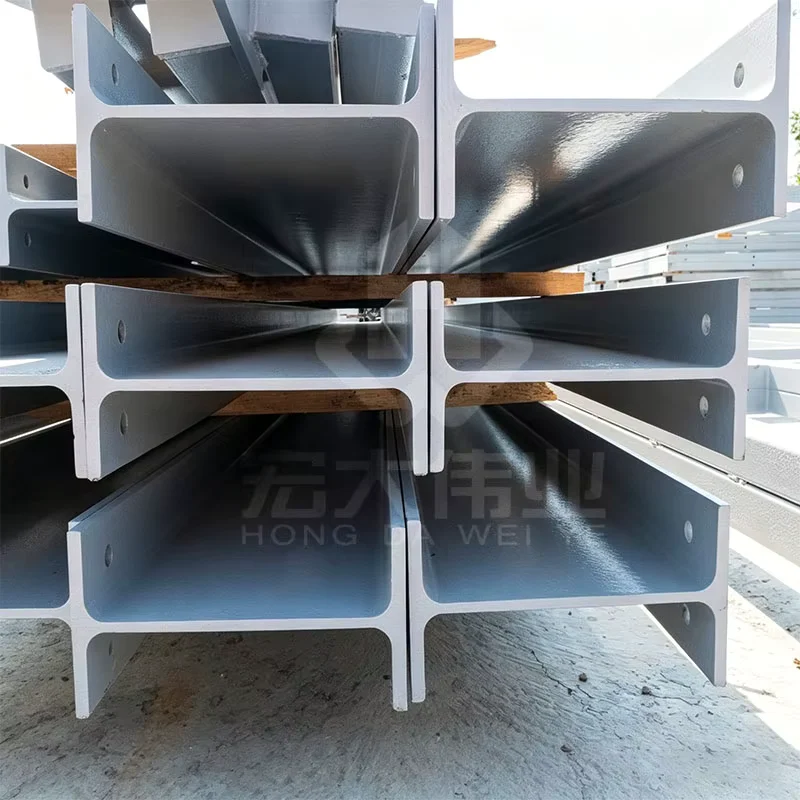
| Section Shape | Solid H-shape Steel Beam (Main Frame), C/Z Shape Steel Channel (Purlin) |
| Technique | Welding, Cutting, Drilling |
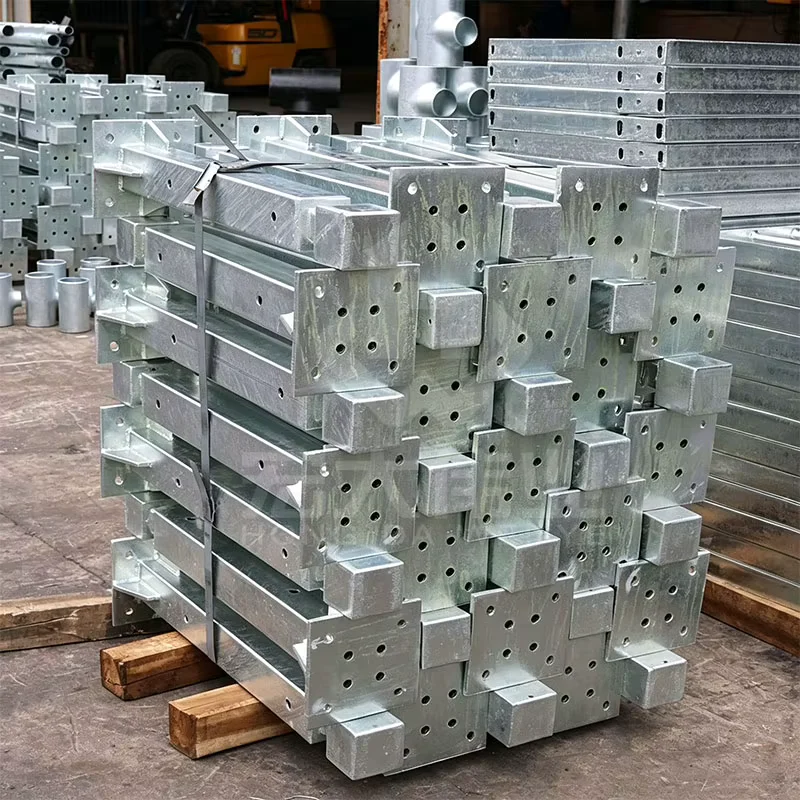
| Surface Treatment | Painting / Galvanized |
| Design Style | Modern |
| Structure Type | Steel Structure |
| Standard | CE, ISO 9001 |
| Application | Steel Warehouse, Steel Workshop, Garage, Building Materials |
| MOQ | 1 Ton |
| Origin | Shandong, China |
Application Suitability
| Industry | Typical Applications |
|---|---|
| Industrial Construction | Steel warehouse main frames, workshop column-beam assemblies, heavy equipment platforms |
| Logistics & Storage | Clear-span warehouse roof trusses, mezzanine floor structures, loading dock canopies |
| Commercial Building | Garage steel frames, retail workshop enclosures, vehicle maintenance bays |
| Infrastructure Support | Building material staging structures, site office steel frames, equipment housing |
What Fragmented Sourcing Costs on a Steel Warehouse Build
Buying beams, purlins, and fabricated nodes from separate yards multiplies coordination overhead and compounds delivery risk.
When procurement teams source H-beam main frames from one yard and C/Z purlins from another, bolt-hole alignment tolerances drift between batches. I have seen warehouse projects in West Africa where the primary frames arrived two weeks ahead of purlins — and when the purlins finally landed, the pre-drilled connection plates did not match the web thickness of the beams. Rework on site meant burning and re-welding in the rain, with no workshop-grade accuracy possible. A single Custom Steel Structure Fabrication Service Supplier that handles welding, cutting, and drilling under one roof keeps every component dimensionally consistent from drawing to container. [NEED_CITE: coordination cost impact of multi-supplier steel procurement on EPC projects]
How Fabricated Frames Match Warehouse Span and Load Requirements
Steel warehouses and workshops demand long clear spans without intermediate columns, which means the H-shape main frame must carry roof dead load, live load, and wind uplift as a continuous moment-resisting unit. Q345B offers higher yield capacity than Q235B for longer spans or heavier crane loads, while Q235B remains cost-effective for lighter workshop enclosures and garage structures. Every Custom Steel Structure Fabrication Service Supplier order is cut and drilled to match the client’s connection drawings, so site crews bolt rather than weld — accelerating enclosure completion in regions where skilled welders are scarce. Our in-house fabrication lines handle the full sequence from raw plate and section to painted or galvanized finished components, so dimensional chains stay closed within the same workshop.
Engineering Compliance and Surface Protection for Export Projects
Structural steel frames exported for warehouse construction must satisfy both the destination country’s building code and the port-of-import documentation requirements. Q235B and Q345B are Chinese standard grades widely accepted across Southeast Asia, Africa, and South America, often cross-referenced against S235/S355 in tender specifications. [NEED_CITE: steel grade equivalence mapping between GB, EN, and ASTM standards for structural sections] Surface treatment choice depends on the service environment: painting suits indoor workshops and garages where corrosion exposure is moderate, while hot-dip galvanizing is specified for coastal warehouses, agricultural storage, or any structure exposed to high humidity. Welding quality on H-beam flange-to-web joints must meet acceptance criteria for full-penetration or fillet welds depending on the load path, and every drilled hole for purlin cleats must hold position tolerance so that C/Z channels seat flush without forcing. Third-party inspection by SGS or BV is routinely requested by EPC buyers to validate weld procedures and dimensional checks before container loading. [NEED_CITE: weld inspection acceptance criteria for fabricated structural steel per AWS or EN standards]
Understanding Q235B and Q345B in Fabricated Structures
Q235B is a mild carbon structural steel with good weldability and formability, making it the default choice for secondary members, purlin brackets, and light-gauge connection plates in warehouse frames. Q345B (also known as 16Mn in older Chinese nomenclature) contains manganese as the primary alloying element, delivering roughly higher yield strength than Q235B — which allows designers to reduce section weight on long-span portal frames or crane-supporting columns without sacrificing stiffness. Both grades are supplied as hot-rolled H-sections or fabricated from plate by submerged arc welding, with cutting performed by CNC plasma or oxy-fuel to hold hole patterns and bevel preparations for site welds. Drilling is completed on radial or CNC drill lines to ensure bolt-hole pitch matches the purlin cleat layout. Galvanized surface treatment adds a zinc metallurgical bond that protects cut edges and weld zones — critical because exposed steel at drilled holes and field-cut ends is the first location where corrosion initiates in tropical climates.
Hidden Costs of Incorrect Grade or Tolerance on Fabricated Frames
Specifying Q235B when the structural engineer calculated for Q345B means the frame deflects beyond serviceability limits under design load — the warehouse roof sags, cladding panels tear at overlaps, and the client faces a choice between costly reinforcement or full frame replacement. Conversely, over-specifying Q345B across all members inflates material cost without engineering justification. Missing or incomplete mill test certificates trigger customs holds at destination ports, particularly in African and South American markets where import regulators require chemical and mechanical test reports tied to heat numbers. [NEED_CITE: customs documentation requirements for structural steel imports in West African ports] Tolerance drift on drilled bolt holes forces site crews to ream or weld-wash oversized connections, compromising the slip-critical joint design and introducing rework delays that cascade through the erection schedule.
Why Procurement Teams Consolidate Fabrication with Us
Our three fabrication lines run simultaneously, delivering monthly capacity that covers full warehouse kits for multiple concurrent projects. Every heat of Q235B and Q345B section is tested in our in-house laboratory, and original mill test certificates travel with each shipment — no copies, no reissued documents. Clients ordering Custom Steel Structure Fabrication Service Supplier packages receive consolidated container loading: H-beam frames, C/Z purlins, connection plates, and bracing rods are staged and lashed together so that a single 40-foot container carries a complete portal frame bay, reducing freight cost per ton. We hold stock of standard H-sections and channel sizes for urgent requirements, while custom-cut and drilled orders follow typical production lead times. Professional export documentation — including packing lists, bills of lading, and certificates of origin — is prepared by a dedicated team that understands the customs requirements of over 50 destination countries.
Documentation & Compliance
- Mill test certificate documenting Q235B and Q345B chemical composition (C, Si, Mn, P, S) and mechanical properties (yield strength, tensile strength, elongation) per Chinese GB standards, with heat number traceability to each H-beam and channel used in the fabrication.
- CE certificate confirming conformity for steel structure components exported to markets requiring European technical assessment, covering welding procedure qualification and dimensional tolerances.
- ISO 9001 quality management certificate covering the full fabrication workflow from material receipt through cutting, welding, drilling, surface treatment, and final inspection.
- SGS or BV third-party inspection report available on request, covering weld visual and NDT examination, dimensional verification of drilled hole patterns, and surface coating thickness measurement for painted or galvanized finishes.
- Material traceability report linking each fabricated component to its parent heat number, enabling site engineers to verify grade compliance before erection.
- Full customs document package including commercial invoice, packing list with component mark numbers, bill of lading, and certificate of origin formatted for the destination port’s import requirements.
Packaging, Loading & Delivery
- Fabricated H-beam frames and C/Z purlins are bundled with galvanized steel strips and separated by timber dunnage to prevent contact damage to painted or galvanized surfaces during ocean transit.
- Galvanized components receive additional edge protectors at cut ends and weld zones to preserve zinc coating integrity, since exposed steel at drilled holes is vulnerable to white rust formation in humid container environments.
- Container loading plans are optimized by our export team to fit complete warehouse frame bays into 40-foot high-cube containers, with heavier H-beam sections positioned at the bottom and lighter purlins nested above to maximize weight utilization.
- CNC-cut and drilled components are labeled with heat number, steel grade (Q235B or Q345B), and assembly mark matching the erection drawing, so site crews can identify each piece without cross-referencing the full material list.
- FOB, CIF, and door-to-door delivery options are available, with professional customs clearance support for destination ports across Southeast Asia, Africa, the Middle East, and South America.
Starting Your Warehouse or Workshop Steel Package
Submit your structural drawings, bill of materials, steel grade preference (Q235B or Q345B), surface treatment requirement, and destination port — our engineering team returns a detailed quotation with fabrication scope, mill test certificate commitment, and container loading plan within 12 hours. Non-standard dimensions, special hole patterns, and custom welding details are reviewed against our fabrication capacity, and third-party inspection arrangements are confirmed before production begins.
Request Your Fabrication Quote and Mill Test Certificate Package
Send specifications via email to admin@sdxinjiyuan.com or contact by WhatsApp at +86 188 5315 7756 to receive pricing, certification documentation, and container loading confirmation for your steel warehouse or workshop project.
Frequently Asked Questions
Q: What is the difference between Q235B and Q345B for fabricated steel structures?
A: Q235B is a mild structural steel with good weldability suited for light frames, purlin supports, and secondary members. Q345B contains manganese for higher yield strength, making it appropriate for long-span portal frames, crane-supporting columns, and heavier workshop structures where deflection control matters.
Q: Can you provide mill test certificates and third-party inspection for fabricated components?
A: Yes. Every batch of Q235B and Q345B material is accompanied by original mill test certificates showing chemical composition and mechanical properties, traceable by heat number. SGS or BV third-party inspection is available on request to verify welding quality, dimensional accuracy, and coating thickness before shipment.
Q: What surface treatment options are available for steel warehouse frames?
A: We offer painting for indoor or moderate-corrosion environments such as standard workshops and garages, and hot-dip galvanizing for structures exposed to high humidity, coastal conditions, or agricultural storage where corrosion resistance is critical.
Q: What is the minimum order quantity for custom fabricated steel structures?
A: The MOQ is 1 Ton, which supports trial orders for smaller garage or workshop projects as well as full-container bulk orders for large warehouse developments.
Q: How do you handle container loading for mixed steel structure components?
A: Our export team prepares optimized loading plans that consolidate H-beam main frames, C/Z purlins, connection plates, and bracing into single containers, with heavier sections positioned at the base and detailed lashing to prevent transit damage to painted or galvanized surfaces.