

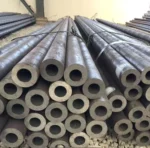

Description
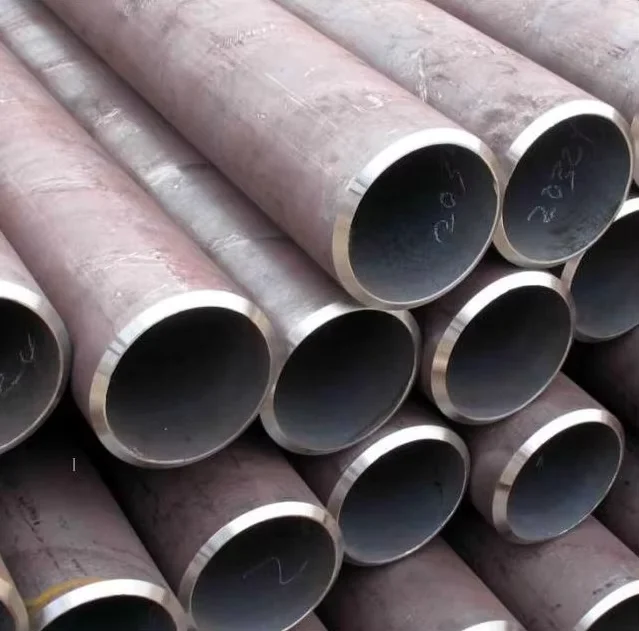
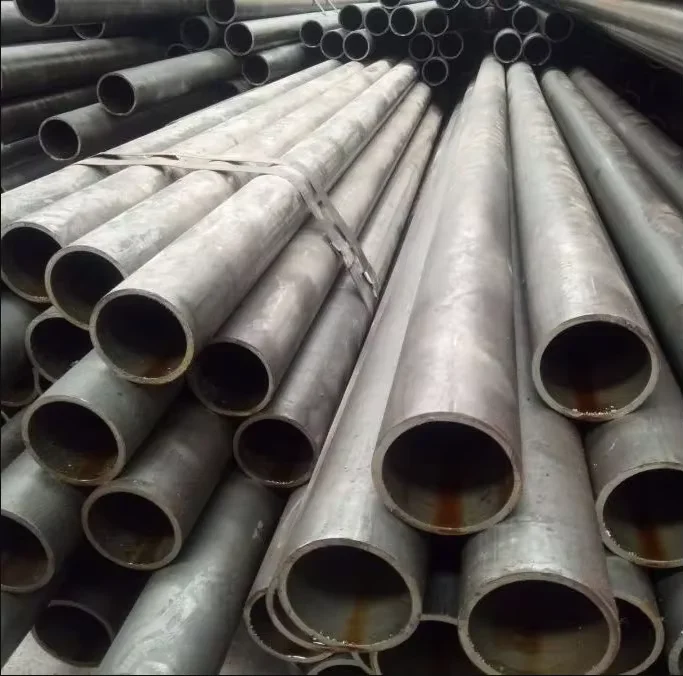
Factory-direct ASTM A106 seamless steel pipe supplier — Every Grade A and Grade B pipe ships with original mill test certificates traceable by heat number, backed by in-house lab verification before container loading.
Technical Specifications
| Parameter | Value |
|---|---|
| Designation | ASTM A106 Seamless Steel Pipe |
| Product Type | Seamless Steel Pipe |
| Steel Grade | ASTM A106 Grade A, ASTM A106 Grade B, 20#, 45# |
| Standard | ASTM A106, API 5CT, API 5L, JIS, BS, DIN |
| Section Shape | Round |
| Outer Diameter | 10–609 mm |
| Wall Thickness | 1.65–59.54 mm |
| Technique | Hot Rolled / Cold Rolled / Cold Drawn |
| Surface Treatment | Oiled / Non-oiled / Black |
| Tolerance | ±5% / ±1% |
| Ends | Plain / Beveled |
| Application | Fluid transportation, Boiler systems, Oil & gas pipelines, Hydraulic systems, Chemical fertilizer pipelines, Drill pipe, Structural applications, Machinery parts |
| Processing Service | Welding, Punching, Cutting, Bending |
| Origin | Shandong, China |
Application Suitability
| Industry | Typical Applications |
|---|---|
| Oil & Gas | High-temperature process lines, wellhead piping, refinery transfer pipelines |
| Power Generation | Boiler tube banks, superheater headers, steam drain lines |
| Chemical Processing | Reactor feed lines, heat exchanger piping, acid transfer systems |
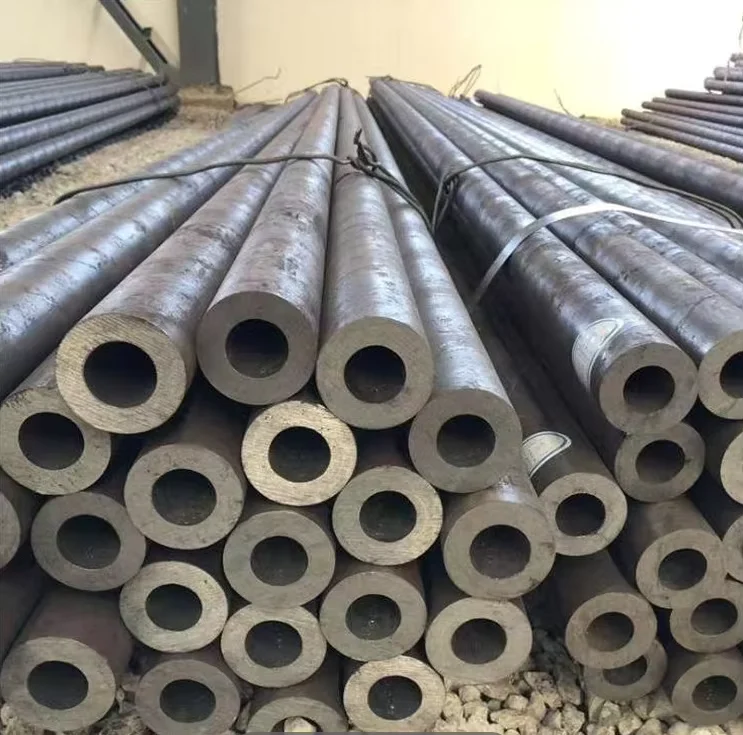
| Industrial Construction | Hydraulic cylinder barrels, machinery shafts, structural support columns |
What Wall-Thickness Tolerance Costs on a High-Pressure Boiler Order
A ±1% cold-drawn tolerance versus ±5% hot-rolled tolerance determines whether your boiler tubes pass hydrostatic testing on-site or get rejected at the inspection stage.
When sourcing ASTM A106 seamless steel pipe for pressure-containing applications, the gap between catalog specs and actual wall thickness is where projects bleed money. Buyers receive pipes that measure below minimum wall at random points, hydrostatic tests fail, and the entire batch sits in the yard while replacement material crosses the ocean. Missing or incomplete mill test certificates compound the problem — customs authorities hold the shipment, the project crane sits idle, and the EPC contractor absorbs demurrage costs that dwarf the original pipe price difference. [NEED_CITE: ASTM A106 hydrostatic testing requirements and wall thickness tolerance]
Matching Grade A and Grade B to Pressure-Temperature Service Conditions
ASTM A106 Grade B dominates high-temperature service above 350°C in boiler and process piping because its carbon-manganese chemistry delivers higher tensile strength than Grade A while maintaining weldability. For moderate-temperature fluid lines and hydraulic systems, Grade A provides adequate performance at lower material cost. Our cold-drawn ASTM A106 seamless steel pipe achieves ±1% wall thickness tolerance through secondary reduction passes, making it suitable for precision machining into hydraulic cylinder barrels where dimensional consistency directly affects seal performance. Hot-rolled pipes with ±5% tolerance serve general-purpose steam and water lines where tight dimensional control is less critical than throughput volume.
Engineering Compliance and Certification Requirements for Pressure Piping
Pressure piping systems operating under ASME B31.1 or B31.3 require documented material traceability from heat number through final installation. ASTM A106 Grade B pipes must carry mill test certificates showing chemical composition within standard limits — carbon capped at 0.30%, manganese between 0.29–1.06% — along with tensile test results confirming minimum 415 MPa tensile strength. [NEED_CITE: ASME B31.3 material requirements for carbon steel seamless pipe] For projects shipping to European markets, supplementary EN 10216-2 equivalence documentation helps avoid classification society disputes during pressure vessel registration. Beveled ends per ASME B16.25 prepare pipes for butt-weld field joints without secondary machining, while plain ends suit threaded couplings in low-pressure utility lines. Third-party inspection by SGS or BV verifies wall thickness distribution and surface quality before container sealing.
Hot Rolled versus Cold Drawn: Process Selection for Tolerance and Surface Finish
Hot-rolled ASTM A106 seamless steel pipe emerges from the piercing mill and elongation stand at elevated temperature, producing a mill-scale surface that requires pickling or shot-blasting before painting. The process suits large-diameter, heavy-wall pipes — 219 mm OD with 25 mm wall — where dimensional precision yields diminishing returns against cost. Cold-drawn pipes undergo a second reduction through a die and mandrel at room temperature, compressing the wall to tighter tolerances and producing a smooth bright finish ideal for machined components or visible architectural elements. The cold-drawing process also increases yield strength through strain hardening, though this must be balanced against reduced ductility for field bending operations. For ASTM A106 Grade B pipes destined for hydraulic cylinder applications, cold-drawn finish eliminates the need for external grinding before chrome plating.
The Hidden Cost of Negative Tolerance Abuse in Seamless Pipe Procurement
Specifying ASTM A106 seamless steel pipe at 10 mm nominal wall seems straightforward until the supplier ships material at 9.0 mm — technically within the −12.5% allowance that many standards permit, but functionally inadequate for the design pressure your engineer calculated. [NEED_CITE: negative tolerance practices in seamless steel pipe trade] The pipe passes visual inspection, clears customs with forged or borrowed certificates, and enters service. Two years later, a corrosion hotsp* and the forensic investigator discovers wall thickness below design minimum. The liability falls on the procurement team who accepted material without independent verification. Original mill test certificates from a reputable producer, cross-checked against ultrasonic thickness measurements at receiving, cost a fraction of a single incident investigation.
Procurement Confidence from a Producer Who Measures Before Shipping
I learned early that wall thickness claims mean nothing until you watch the ultrasonic gauge confirm them. Every ASTM A106 seamless steel pipe leaving our facility passes through three-stage inspection: dimensional verification at the rolling line, chemical analysis in our in-house laboratory, and final wall-thickness mapping before bundling. Our 2,800+ specification inventory covers OD 10–609 mm across Grade A, Grade B, 20#, and 45# — standard sizes ship from ready stock while custom lengths and beveling requirements enter our processing queue within typical production lead times. Factory-direct pricing eliminates trading margins, and volume discount programs reward partners committing to recurring procurement schedules. Every shipment carries original mill test certificates traceable to heat number, with SGS or BV third-party inspection available for buyers requiring independent verification. Professional loading plans optimize container weight distribution for heavy-wall pipes, and our export documentation team handles customs paperwork for destination ports across 50+ countries.
Documentation & Compliance
- Mill test certificate documenting ASTM A106 Grade B chemical composition (C, Mn, Si, S, P) and mechanical properties (tensile strength, yield strength, elongation) per heat number
- API 5L and API 5CT compliance certificates for oil country tubular goods applications
- ISO 9001:2015 quality management system certificate covering production and inspection processes
- SGS or BV third-party inspection report verifying wall thickness, surface quality, and dimensional tolerance
- Material traceability documentation linking each pipe to its heat number, chemical analysis, and mechanical test results
- Export customs documents including commercial invoice, packing list, bill of lading, and certificate of origin
Packaging, Loading & Delivery
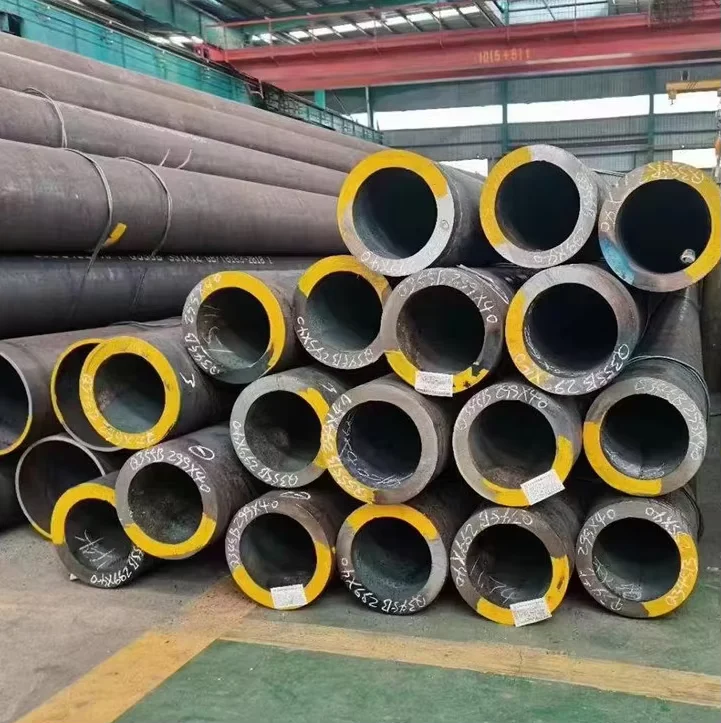
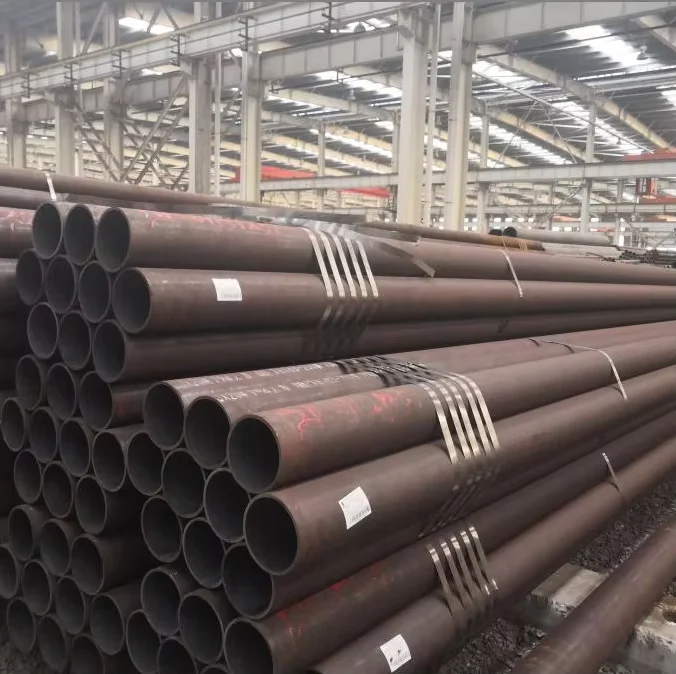
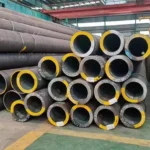
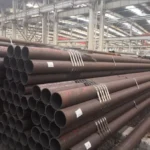
- ASTM A106 Grade B pipes bundled with steel strips and edge protectors, seaworthy packaging preventing surface damage during ocean transit
- Oiled surface treatment applied to non-galvanized black pipes, providing rust prevention during storage and shipping
- Container loading plans optimized for heavy-wall pipes (wall thickness above 20 mm), maximizing weight utilization within 20ft and 40ft containers
- Custom cutting to project-specified lengths with beveled ends prepared for field welding, reducing on-site fabrication time
- Heat number and steel grade stenciled on each pipe end, enabling rapid identification during installation
- FOB, CIF, and DDP shipping terms available with real-time tracking from Jinan port to destination
Start Your ASTM A106 Procurement with Verified Documentation
Submit your specification sheet — outer diameter, wall thickness, steel grade, quantity, and destination port — to receive competitive pricing with mill test certificate commitments. Our team responds within hours with a detailed quotation covering material costs, processing services, and logistics options. Request non-standard lengths, special end treatments, or third-party inspection arrangements before production begins.
Request Your ASTM A106 Quote with Mill Test Certificates
Send specifications via email to admin@sdxinjiyuan.com or contact us on WhatsApp at +86 188 5315 7756 for pricing and delivery confirmation.
Frequently Asked Questions
Q: What is the difference between ASTM A106 Grade A and Grade B for high-temperature service?
A: ASTM A106 Grade B contains higher carbon and manganese content than Grade A, delivering minimum tensile strength of 415 MPa versus 330 MPa for Grade A. Grade B suits boiler tubes and process piping operating above 350°C, while Grade A serves moderate-temperature fluid lines where lower strength requirements allow cost savings.
Q: How do you verify wall thickness tolerance on ASTM A106 seamless steel pipe?
A: Each pipe undergoes ultrasonic thickness measurement at multiple points along its length before bundling. Original mill test certificates document measured values, and third-party inspection by SGS or BV provides independent verification for buyers requiring additional assurance.
Q: What is the difference between hot-rolled and cold-drawn ASTM A106 pipes?
A: Hot-rolled pipes offer ±5% wall thickness tolerance with mill-scale surface finish, suitable for general-purpose applications at lower cost. Cold-drawn pipes achieve ±1% tolerance with smooth bright finish, ideal for precision machining and applications requiring tight dimensional control.
Q: Can you provide custom cutting and beveling services for field welding?
A: Yes, our processing services include cutting to project-specified lengths, beveling per ASME B16.25 for butt-weld preparation, and punching or bending for specialized applications. These services reduce on-site fabrication time and ensure joint preparation meets welding procedure specifications.
Q: What documentation accompanies an ASTM A106 seamless steel pipe shipment?
A: Every shipment includes original mill test certificates traceable by heat number, packing lists, commercial invoices, and certificates of origin. API 5L/5CT certificates accompany oil country tubular goods, and ISO 9001:2015 certification covers our quality management system.
Secure Factory-Direct Pricing on ASTM A106 Seamless Steel Pipe
Email admin@sdxinjiyuan.com or WhatsApp +86 188 5315 7756 with your specifications to receive a detailed quotation with mill test certificate commitments.