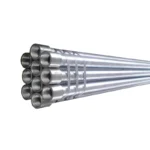
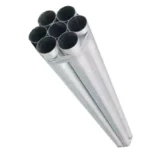
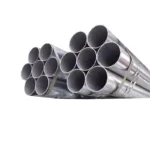
Description
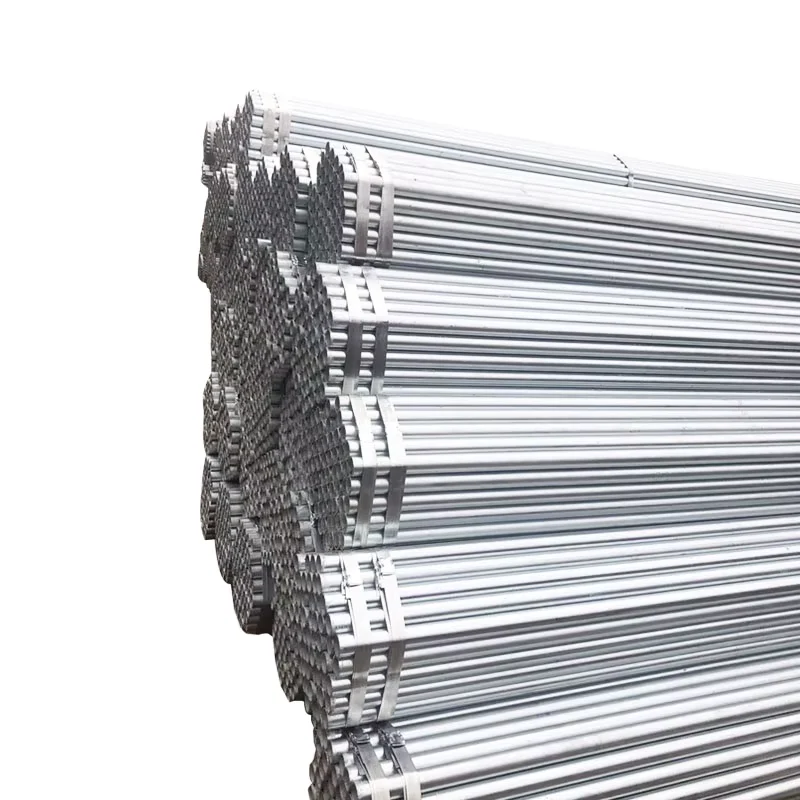
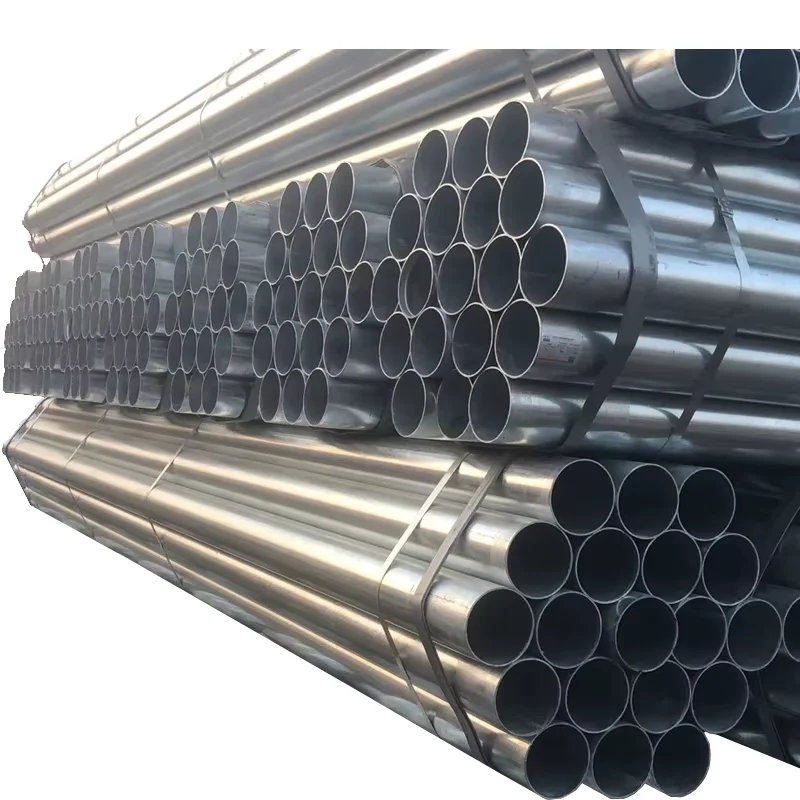
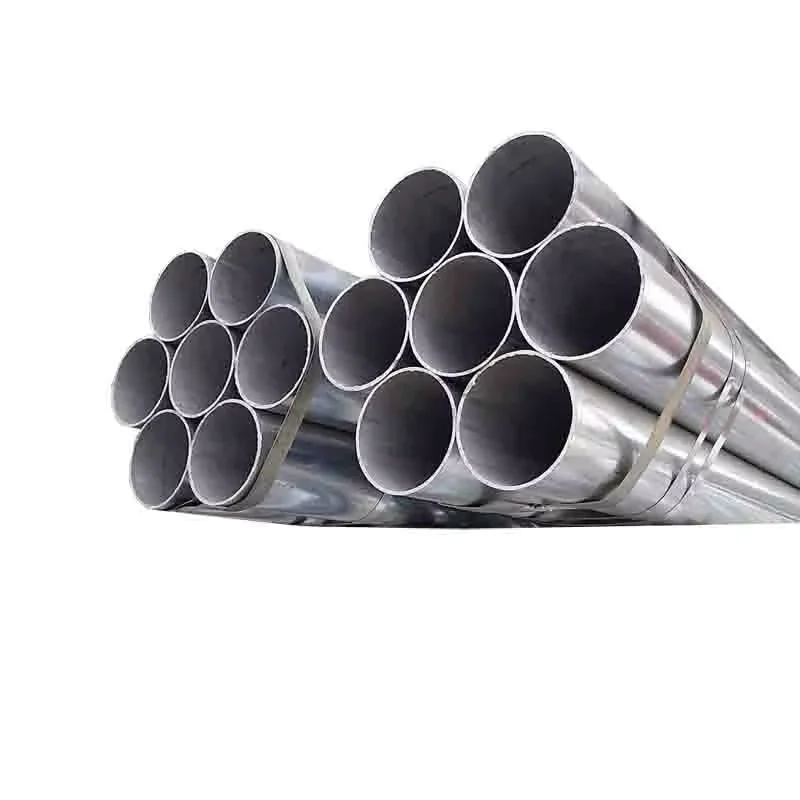
Factory-Direct BS 1387 Galvanized Pipe — Every batch passes in-house coating thickness verification before container loading, eliminating zinc-coating disputes at destination ports.
Technical Specifications
| Parameter | Value |
|---|---|
| Designation | Gr.B BS 1387 Hot Dipped Galvanized ERW Steel Pipe |
| Product Type | Round Steel Pipe (ERW / Welded) |
| Steel Grade | Gr.B (ASTM A53 Grade B equivalent) |
| Standard | BS 1387, ASTM, API, JIS, ISO 9001 |
| Section Shape | Round |
| Size Range | 1/2″–8″ (DN15–DN200) / 21.3–273 mm |
| Wall Thickness | 1.8–8 mm (up to 20 mm) |
| Length | 5.8 m / 6 m / 6.4 m / 12 m |
| Technique | ERW (Electric Resistance Welded) |
| Surface Treatment | Hot Dipped Galvanized, Zinc Coated Min 300 g/m² |
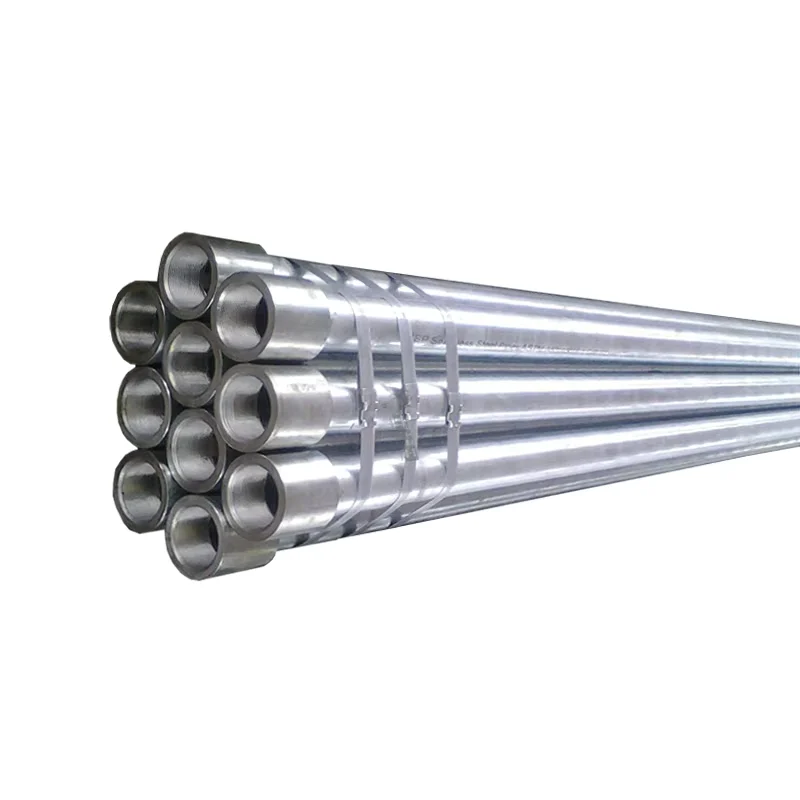
| Ends | Threaded with couplings (NPT / BS) |
| Tolerance | ±5% / ±10% / ±15% (varies by parameter) |
| Oiled or Non-oiled | Slightly Oiled |
| Invoicing | By Theoretical Weight |
| Processing Service | Welding, Cutting |
| Application | Fluid transport / Gas pipeline / Chemical fertilizer pipeline / Structural / Construction / Transport infrastructure |
| Origin | Shandong, China |
Application Suitability
| Industry | Typical Applications |
|---|---|
| Municipal Water & Drainage | Potable water distribution mains, stormwater discharge lines, sewage reticulation networks |
| Oil & Gas Distribution | Low-pressure gas reticulation, fuel oil transfer lines, meter station piping |
| Construction & Infrastructure | Scaffolding uprights, perimeter fencing posts, handrail supports, greenhouse structural frames |
| Industrial Processing | Chemical fertilizer plant transfer lines, fire protection standpipe systems, compressed air mains |
| Transport Infrastructure | Highway signpost foundations, bridge drainage conduits, tunnel ventilation duct supports |
Where Zinc Coating Thickness Decides Whether Your Shipment Clears Site Inspection
A 20-micron shortfall on a BS 1387 hot dipped galvanized steel pipe can condemn an entire container at the receiver’s third-party复检.
I have seen 4-inch hot dipped galvanized tubes arrive at West African ports with zinc measured at 45 microns against a 65-micron contract spec — the whole lot sat on the quayside for two months before rework costs were settled. [NEED_CITE: BS 1387 zinc coating mass and thickness requirements] Global buyers repeatedly face quality uncertainty when suppliers ship without independent lab verification, and missing mill test certificates compound the problem by triggering customs holds. Fragmented sourcing across multiple yards adds coordination overhead, while inconsistent coating thickness leaves pipelines vulnerable to premature corrosion in aggressive soil or marine environments.
Matching DN15–DN200 Sizes to Pipeline and Structural Load Paths
The 1/2″–8″ OD range of this BS 1387 hot dipped galvanized steel pipe covers everything from branch-line water connections to main structural uprights. Threaded ends with NPT or BS couplings allow field installation without on-site welding, which matters on projects where hot-work permits slow progress. Hot dip galvanizing at ≥300 g/m² zinc coating provides long-term corrosion protection for buried or exposed installations in coastal and industrial atmospheres. Our production lines hold full stock across the DN15–DN200 range, so project buyers can consolidate fluid transport piping and structural framing tubes into a single container load rather than splitting orders across vendors.
Engineering Compliance: BS 1387, ASTM A53, and Third-Party Verification
BS 1387 Gr.B aligns closely with ASTM A53 Grade B in chemical composition and tensile requirements, making this BS 1387 hot dipped galvanized steel pipe suitable for projects specifying either standard. [NEED_CITE: steel grade equivalence between BS 1387 and ASTM A53] For European market shipments, CE certification under EN 10210 / EN 10219 confirms conformity with structural hollow section directives, while ISO 9001:2015 governs the production quality management system. Wall thickness tolerance of ±5% to ±15% depending on dimension must be factored into structural calculations — negative tolerance reduces actual weight versus theoretical invoicing weight, affecting both load capacity and per-ton freight cost. Third-party inspection by SGS or BV is available before shipment to independently verify coating thickness, dimensional accuracy, and mechanical properties. [NEED_CITE: EN 10219 cold-formed hollow section dimensional tolerance requirements]
ERW Welding, Hot Dip Galvanizing, and Gr.B Steel Grade Explained
ERW (Electric Resistance Welded) forming produces a longitudinal seam by passing current through the steel strip edges under pressure — the process delivers tight dimensional control and cost efficiency for sizes up to 8″ OD, making it the standard choice for BS 1387 galvanized pipe in this diameter range. Gr.B steel grade provides minimum yield strength adequate for low-to-medium pressure fluid conveyance and general structural applications, with weldability and formability suited to field cutting and threading. Hot dip galvanizing immerses the finished ERW tube in molten zinc, creating a metallurgically bonded coating that resists mechanical damage during handling and provides sacrificial cathodic protection against corrosion. The ≥300 g/m² zinc mass specified here corresponds to a heavy-class coating under BS 1387, appropriate for outdoor exposure or mildly corrosive service environments. Threaded ends with couplings eliminate field welding, preserving the galvanized coating integrity at joints — a detail that matters when coating damage becomes the first corrosion failure point.
Hidden Costs When Coating Thickness and Mill Certificates Fall Short
Ordering BS 1387 hot dipped galvanized steel pipe without verified coating thickness invites rework costs when site inspection reveals sub-spec zinc — the pipe may pass visual checks but fail magnetic or gravimetric testing. Missing or incomplete mill test certificates cause customs delays in markets requiring traceable documentation, turning a routine shipment into a bonded-warehouse storage bill. [NEED_CITE: import documentation requirements for galvanized steel pipe] Negative wall thickness tolerance beyond the stated ±5%–±15% range reduces structural load capacity and can trigger rejection on engineered projects where calculations depend on minimum section properties. Material substitution — shipping a lower grade against a Gr.B order — creates latent safety risk in pressure-containing or load-bearing applications, with liability exposure long after the container has left the port.
Why Bulk Buyers Source BS 1387 Galvanized Pipe Through Our Jinan Facility
Factory-direct pricing applies because we manufacture on three own production lines rather than brokering through trading desks — volume discounts activate for recurring partners without minimum order barriers that block trial procurement. Every heat carries an original mill test certificate traceable by heat number, and our in-house laboratory runs three-stage inspection from raw material receipt through final dimensional and coating checks before dispatch. The 2,800+ specification inventory across round, square, rectangular, and section steel means project buyers can consolidate multi-category orders into combined container loads, reducing per-unit freight and eliminating the coordination overhead of managing multiple suppliers. Flexible MOQ from one-ton trial orders to full-container bulk, with split shipment support, matches the procurement rhythm of traders building regional stock and EPC teams phasing material delivery to site. Professional export documentation handling covers commercial invoice, packing list, bill of lading, and certificate of origin, with SGS or BV third-party inspection coordinated on request before container sealing.
Documentation & Compliance
- Mill test certificate documenting Gr.B chemical composition and mechanical properties per BS 1387, traceable to heat number for each production batch
- CE certificate confirming EN 10210 / EN 10219 conformity for structural hollow sections destined for European Union markets
- ISO 9001:2015 quality management system certificate covering the full ERW welding and hot dip galvanizing production process
- SGS or BV third-party inspection report verifying zinc coating thickness, dimensional tolerance, and surface quality prior to shipment
- Material traceability documentation linking each pipe to its heat number, production date, and coating batch for project quality records
- Export customs documents including packing list, bill of lading, and certificate of origin formatted to importing country requirements
Packaging, Loading & Delivery
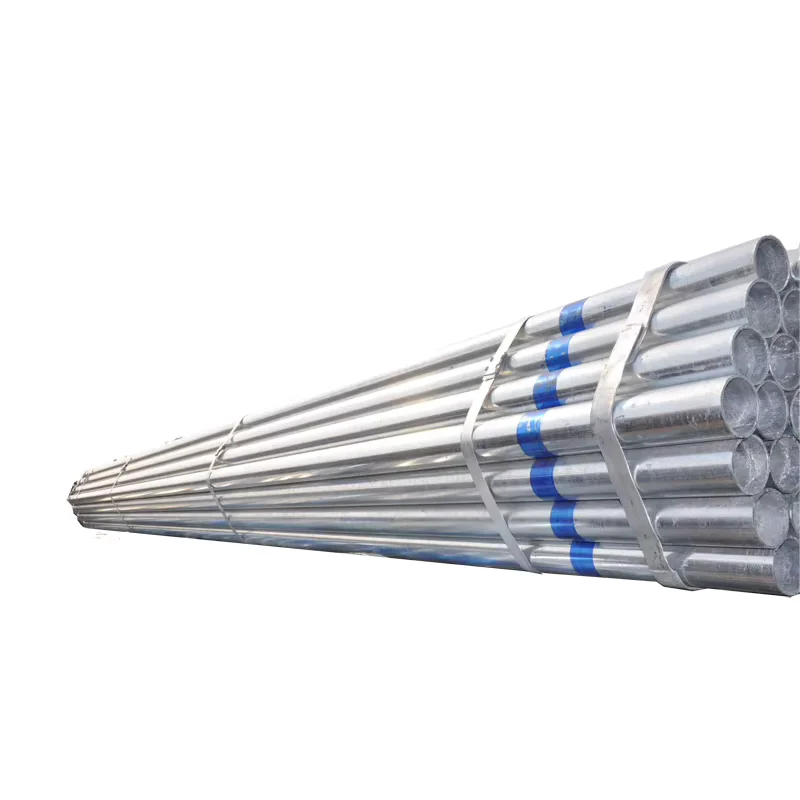
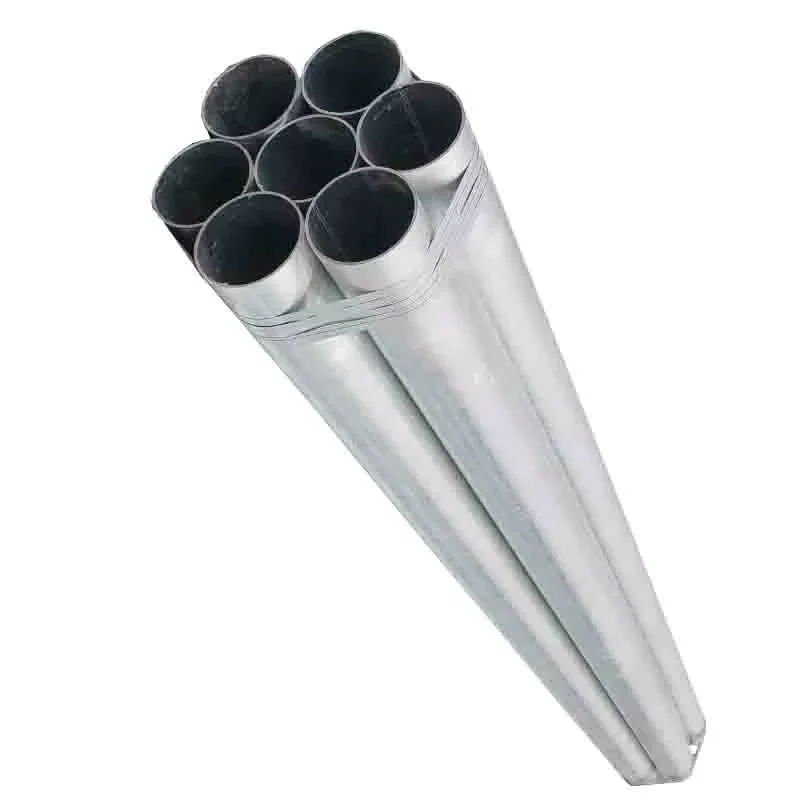
- Hot dipped galvanized ERW round pipes bundled with steel strips and edge protectors to preserve the zinc coating during ocean transit and crane handling
- Slight oiling applied to threaded ends and couplings to prevent white rust formation on the galvanized surface during humid container conditions
- Container loading optimized for 5.8 m / 6 m / 12 m lengths across DN15–DN200 sizes, maximizing payload per 20ft or 40ft standard shipping unit
- Heat number and Gr.B grade stenciled on each pipe bundle for site identification and mill test certificate cross-referencing during inspection
- FOB Jinan or Qingdao port pricing available, with CIF and DDP options coordinated through partnered freight forwarders for door-to-door delivery
- Custom cutting to non-standard lengths available before galvanizing, supporting project-specific bill of materials without on-site waste
Getting a Quote with Mill Test Certificates Attached
Submit your specification sheet — OD, wall thickness, length, quantity, steel grade, and destination port — and receive a bulk quotation with volume pricing, delivery timeline, and sample mill test certificate within twelve hours. Non-standard dimensions, coupling standards, or certification requirements are confirmed in the same response cycle, so engineering and procurement teams can evaluate compliance without back-and-forth.
Request Your BS 1387 Galvanized Pipe Quotation
Send your specification and quantity to receive factory-direct pricing with mill test certificates and third-party inspection options.
Company: Shandong Xin Jiyuan Special Steel Tube Co., Ltd
Website: www.sdxinjiyuan.com
Tel: +86 531 8573 6315
Mobile/WhatsApp/WeChat: +86 188 5315 7756
Email: admin@sdxinjiyuan.com
Address: No.11889, Jingshi West Road, Lulian Group, Jinan City, Shandong Province, China
Frequently Asked Questions
Q: BS 1387 vs ASTM A53 vs JIS G3452 — what is the steel grade equivalence for Gr.B?
A: Gr.B under BS 1387 corresponds closely to ASTM A53 Grade B in chemical composition and tensile properties. JIS G3452 SGP is a lighter-duty carbon steel pipe grade with different tensile requirements. We supply BS 1387 hot dipped galvanized steel pipe to Gr.B specification and can provide mill test certificates showing compliance to the relevant standard for your market.
Q: How is zinc coating thickness verified, and can we request third-party lab testing?
A: Coating thickness is measured using magnetic induction gauges on each pipe before dispatch, with results recorded against the BS 1387 minimum of 300 g/m². SGS or BV third-party inspection is available on request to independently verify coating mass, adhesion, and uniformity before container loading.
Q: What is the MOQ for BS 1387 galvanized pipe, and do you support split shipments?
A: Trial orders from one ton are accepted, with volume discounts applying as quantity increases. Split shipments against a single contract are supported, allowing traders and project buyers to phase delivery to site or warehouse without renegotiating pricing.
Q: Threaded vs plain ends — which coupling standard (NPT / BS) should I specify?
A: NPT (National Pipe Taper) threads are standard for North American and Middle East markets, while BS (British Standard) threads suit UK, Commonwealth, and many African and Asian markets. Specify your coupling standard in the inquiry so we match threading and supply the correct coupling fittings with each BS 1387 hot dipped galvanized steel pipe.
Q: Theoretical weight vs actual weight — how does tolerance affect invoicing and container loading?
A: Invoicing is by theoretical weight calculated from nominal OD, wall thickness, and length. Actual weight varies within the stated ±5% to ±15% tolerance range depending on the specific dimension. This affects per-ton pricing reconciliation and container payload planning — we provide theoretical weight calculations per size in the quotation so logistics teams can plan loading accurately.