Custom Steel Manufacturing Lead Time & Deposit Terms for Sale
Custom steel manufacturing lead time is dictated by surface treatment bottlenecks, not fabrication speed. Align deposit terms with material risk for non-standard EN10219 orders to secure production sl...
Custom Steel Manufacturing Lead Time & Deposit Terms for Sale
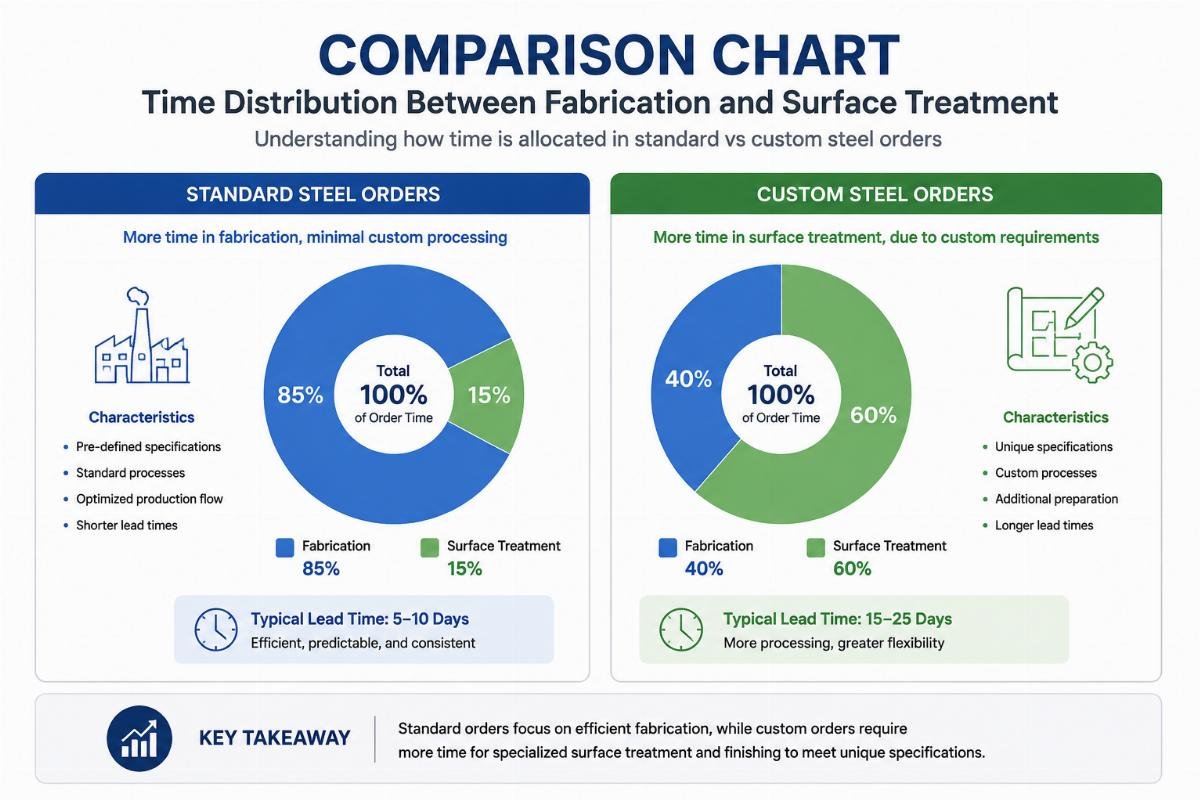
Fabrication speed is rarely the bottleneck in custom steel orders; surface treatment and non-standard rolling schedules are.
Custom steel manufacturing lead time is primarily dictated by the slowest production step, which is often external galvanizing or complex multi-layer painting, rather than the cutting or welding phase itself. Consequently, deposit terms should not be arbitrary flat rates but must reflect the specific material commitment and processing risk associated with non-standard sizes and specialized surface finishes.
I still remember the humidity in Hanover during that particular trade fair. A German buyer needed a batch of non-standard Rectangular Hollow Sections (RHS) compliant with EN10219 standards. Confident in our workshop’s capacity, I promised a six-week delivery window and accepted a standard twenty percent deposit. The fabrication went smoothly, but the order stalled at the galvanizing queue for weeks, missing the vessel cutoff. We had to air-freight partial replacements, wiping out the entire profit margin of the deal. That incident reshaped how I approach every subsequent inquiry. I no longer look at just the welding line; I look at the entire chain, especially the external processes that lie outside direct factory control. [NEED_CITE: impact of external coating queues on structural steel supply chains]
Understanding these dynamics is crucial for procurement managers who need to align their project timelines with realistic production capabilities. Let’s break down why custom steel manufacturing lead time varies so significantly and how to structure agreements that protect both parties.
Why Do Custom Steel Lead Times Vary So Much?
The variability in lead times stems from the difference between standard stock items and custom-engineered components, where non-standard dimensions and specialized surface treatments create unpredictable bottlenecks.
When you order standard S355JR beams or common Q235B plates, the manufacturer likely has raw material in stock or can source it quickly from major mills. The process is linear: cut, weld, inspect, ship. However, custom orders disrupt this flow. Non-standard RHS sizes, for instance, may require specific tooling adjustments or even new roll setups on the forming lines. This initial setup time is often overlooked in preliminary quotes.
More critically, surface treatment acts as a variable multiplier. A simple shot blast might take a day, but hot-dip galvanizing depends on third-party facility availability, which fluctuates with market demand. In peak construction seasons, galvanizing queues can extend by weeks. Similarly, multi-layer painting systems required for bridge components or marine environments involve strict curing times between coats. If the humidity is too high, the paint won’t cure, and the clock stops. [NEED_CITE: environmental factors affecting industrial paint curing times]
Consider a recent project involving large-scale bridge components. The fabrication of the steel plates was completed ahead of schedule. However, the specified coating system required three layers with specific dry-film thickness checks between each application. This added nearly two weeks to the timeline, a factor that was not initially emphasized in the early discussions. Buyers who assume fabrication speed equals total lead time often find themselves scrambling when the finishing stage drags on.
To manage expectations, it is essential to recognize that custom steel manufacturing lead time is not a single number but a sum of independent variables, with surface treatment usually being the most volatile.
What Are the Realistic Timelines for EN-Standard Structural Steel?
Standard specifications ship faster due to available inventory and streamlined processing, while custom RHS and HSS sections require additional weeks for tooling, production scheduling, and certification verification.
For buyers sourcing EN10210 or EN10219 certified structural steel, the distinction between “standard” and “custom” is sharp. Standard sizes, such as common SHS or widely used I-beams, often benefit from batch production runs. Manufacturers like Xin Jiyuan maintain extensive libraries of standard specifications, allowing for quicker turnaround because the raw material procurement and forming parameters are already optimized.
However, when you deviate from these norms—requesting tight-tolerance non-standard RHS or specific wall thicknesses—the timeline expands. The manufacturer must secure specific raw coils or plates, which may not be immediately available. Then, the production line must be adjusted. This is where in-house capabilities matter. Facilities with integrated laboratories and multiple production lines can absorb some of this shock by running parallel tests and adjustments without halting the entire workflow. [NEED_CITE: role of in-house quality control in reducing rework delays]
A distributor once mixed an order of plates, beams, and pipes into a single container consolidation. The plates were ready in days, but the custom pipes required a special welding procedure. The entire shipment waited for the last item, extending the total lead time by over a week. This highlights the importance of synchronizing different product categories within the same order. If one component has a longer custom steel manufacturing lead time, it dictates the ship date for the whole consignment.
Buyers should always ask for a breakdown of the timeline by component type. Assuming a uniform lead time for a mixed container is a common error that leads to storage fees and project delays at the destination port.
How Should Deposit Terms Be Structured for Custom Orders?
Deposits should align with material procurement costs and processing risk, typically requiring higher upfront commitment for complex non-standard works to secure raw material slots and mitigate cancellation risks.
Many buyers expect a flat thirty percent deposit regardless of the order complexity. This approach fails to account for the financial exposure manufacturers face with custom jobs. For standard items, the risk is low because the goods can be resold easily. For non-standard sizes, however, the raw material is often purchased specifically for that order. If the buyer cancels, the manufacturer is left with specialized stock that has limited secondary market value.
Therefore, steel pipe deposit terms and structural steel payment terms should be negotiated based on the level of customization. A higher deposit percentage signals serious intent and helps the manufacturer cover the initial material costs without dipping into working capital meant for other operations. This is particularly true for orders involving rare grades or unusual dimensions.
In the case of the Hanover incident, the low deposit did not provide enough leverage to prioritize the order during the galvanizing bottleneck, nor did it cover the potential loss if the deal fell through. Since then, I have structured deposits to reflect the “point of no return” in production. Once the raw material is cut or the surface treatment begins, the cost is sunk. The deposit should cover these irreversible expenses.
Clear communication about why the deposit is structured this way builds trust. It shows the buyer that the terms are not arbitrary but are designed to ensure the stability of the supply chain and the commitment of resources to their specific project.
How Can Buyers Mitigate Delay Risks in Their Contracts?
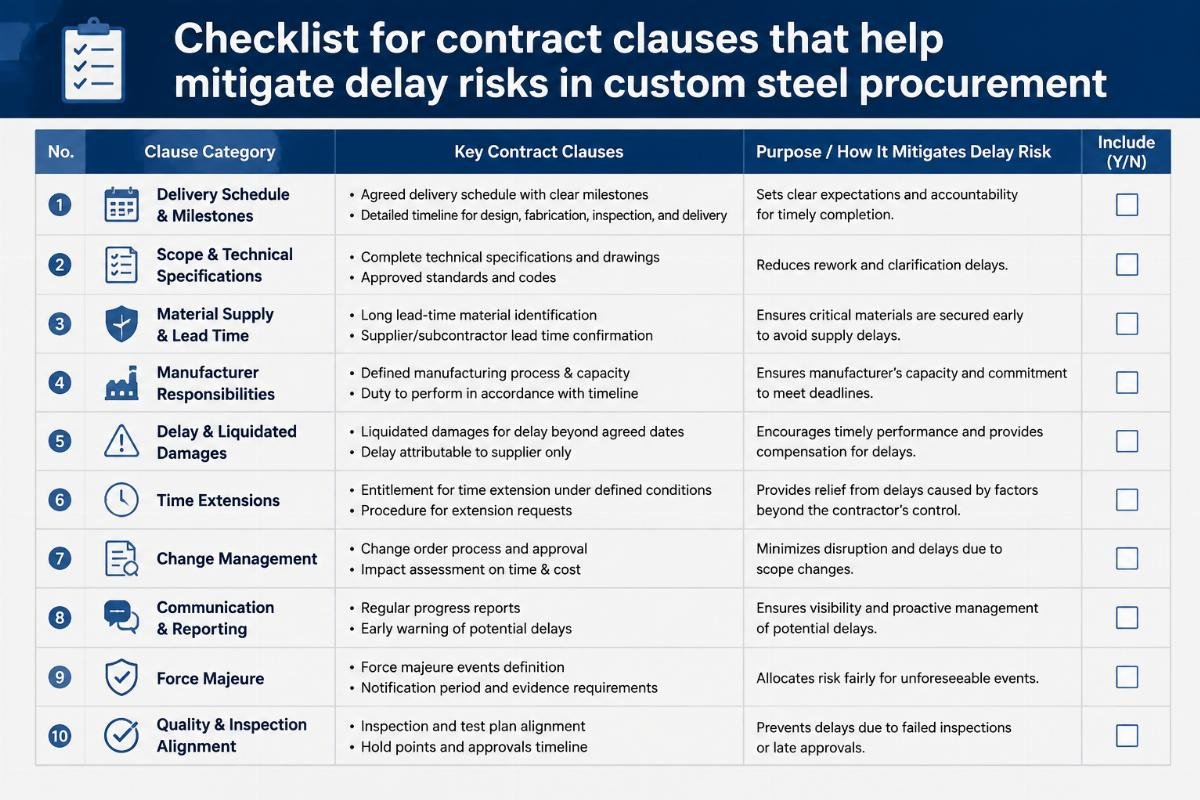
Define clear milestones for surface treatment and inspection, and build buffers for external processing steps to avoid unrealistic deadlines that compromise quality.
Contracts often focus on the final delivery date but neglect the intermediate milestones that determine whether that date is achievable. To mitigate risk, buyers should include clauses that address the specific bottlenecks identified earlier. For instance, specify the expected duration for surface treatment separately from fabrication. This allows for better tracking and early intervention if delays occur.
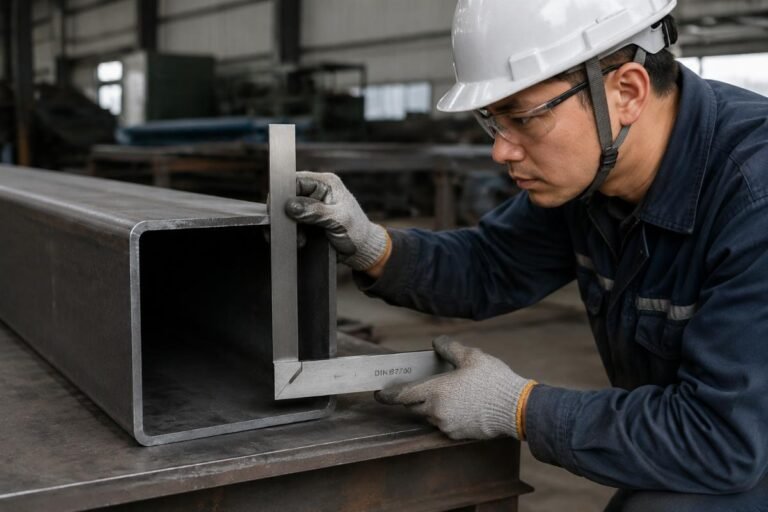
Additionally, consider the impact of third-party inspections. If your contract requires witness testing or independent verification, schedule these events well in advance. Inspectors’ availability can also become a bottleneck, especially during peak seasons. Building a buffer of several days into the schedule for these external dependencies is a prudent strategy. [NEED_CITE: best practices for integrating third-party inspection into steel procurement schedules]
Another effective tactic is to agree on partial shipments. If a container load includes items with different custom steel manufacturing lead time profiles, shipping the ready items first can keep the project moving while the slower components are finished. This requires careful logistics planning but can prevent total project standstills.
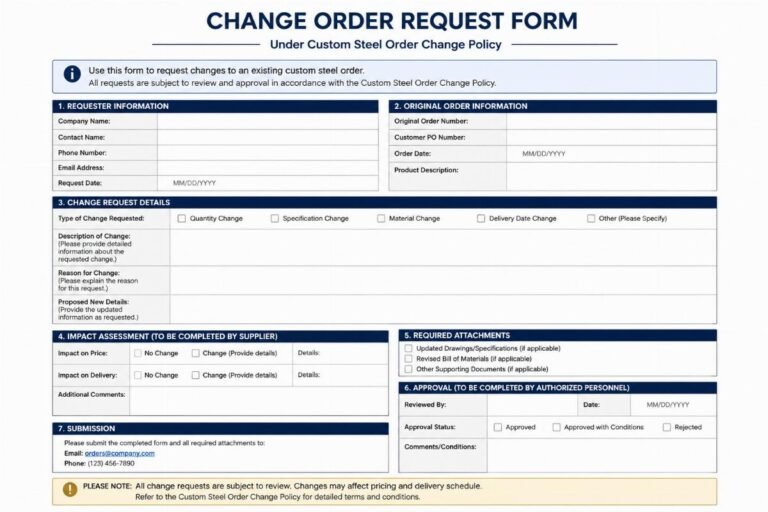
By focusing on these structural elements of the agreement, buyers can transform custom steel manufacturing lead time from a source of anxiety into a managed variable. The goal is not just to get the steel, but to get it in a way that supports the broader project timeline without compromising on quality or compliance.
Conclusion
Realistic timelines and fair deposit structures are the foundation of successful custom steel procurement.
Understanding that surface treatment and non-standard rolling drive custom steel manufacturing lead time allows buyers to plan more effectively. Aligning deposit terms with material risk ensures commitment and stability. By focusing on these critical factors, procurement professionals can navigate the complexities of custom steel orders with greater confidence and fewer surprises.
Editor covering global sourcing, supplier verification, and industrial product knowledge. Content is compiled from manufacturer specifications, industry standards, and hands-on experience with international B2B buyers. Every article is fact-checked before publishing to help procurement professionals make informed decisions.





Discussion
0 Comments