
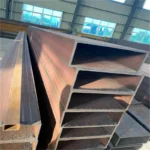
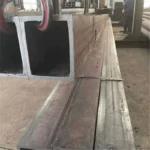
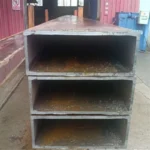
Description
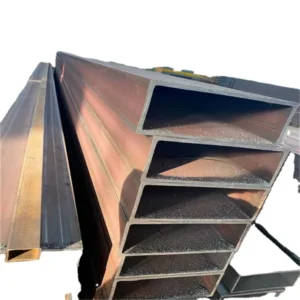
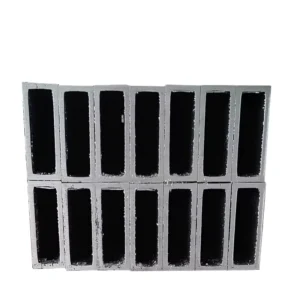
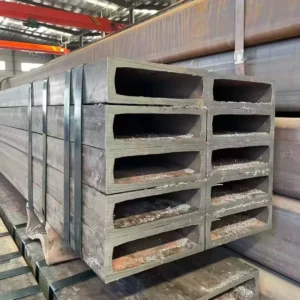
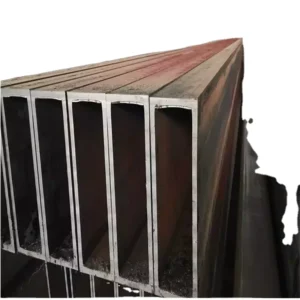
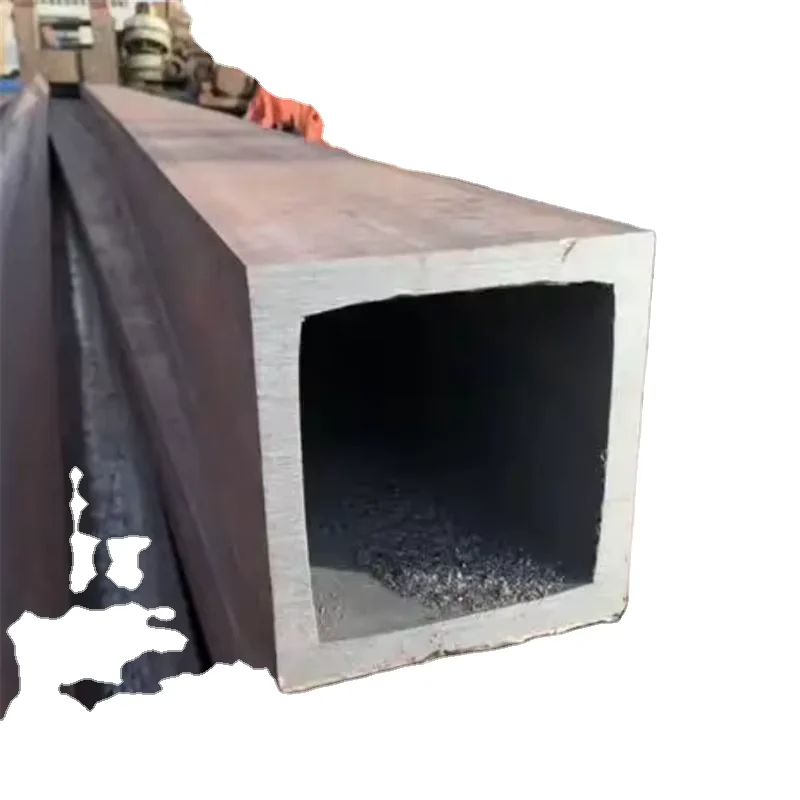
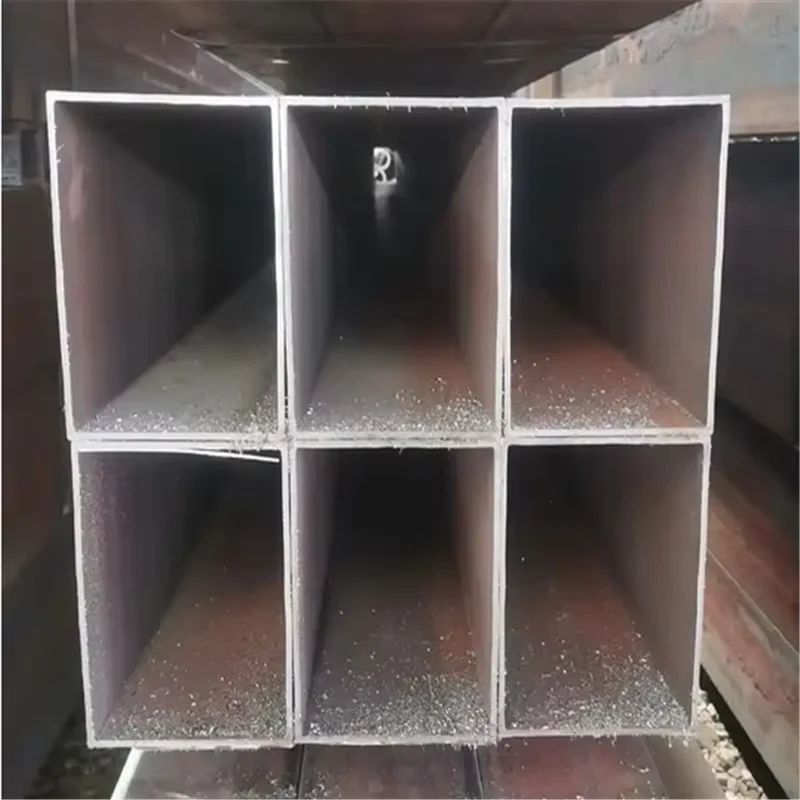
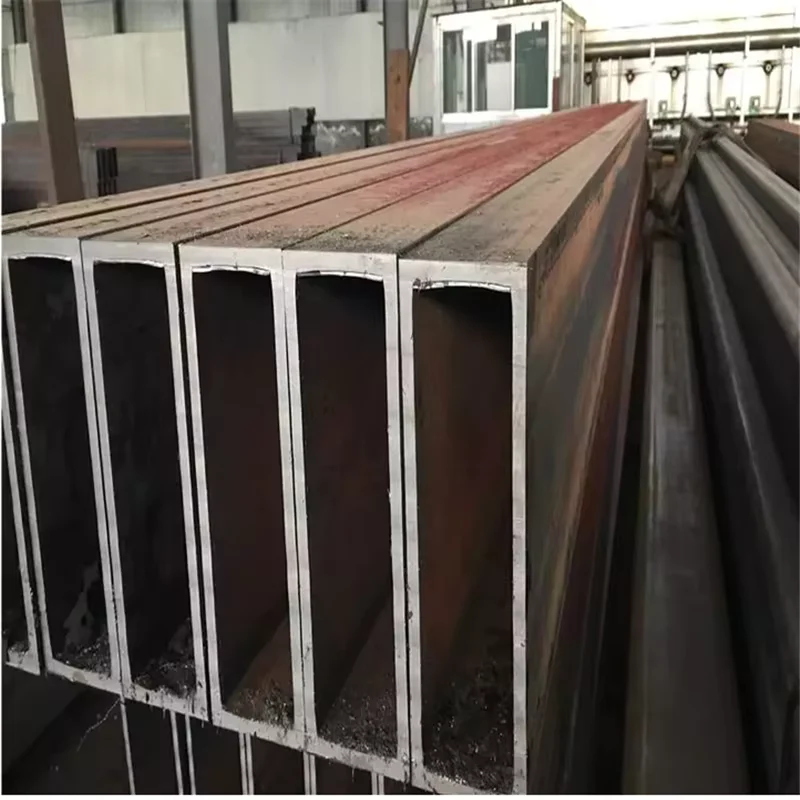
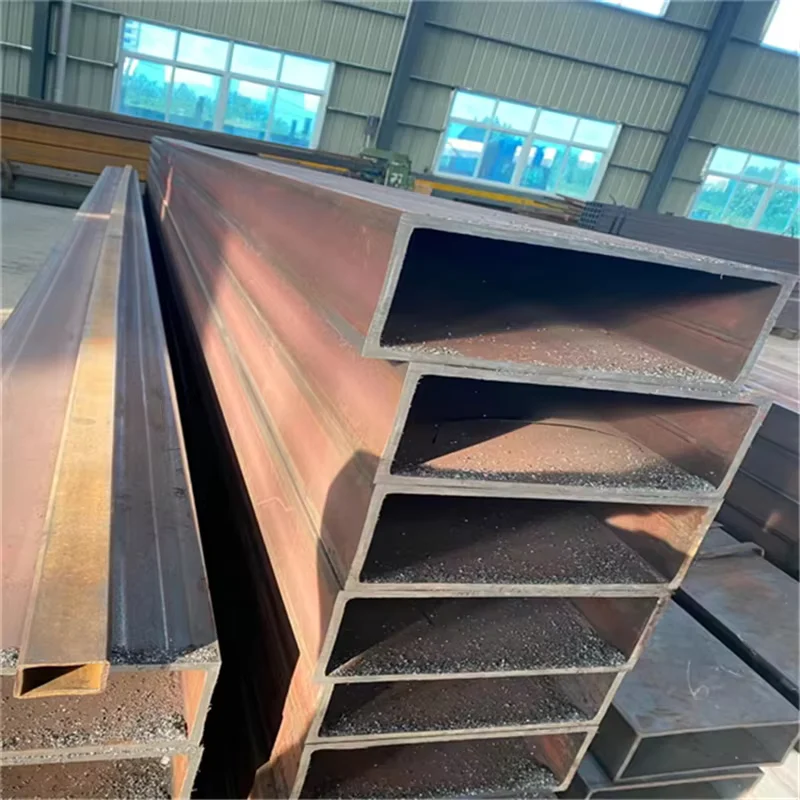
Factory-direct sharp corner tubes — Three dedicated ERW lines produce 90-degree S355JR and S275JR sections with ±1% wall-thickness tolerance and full EN 10210 traceability.
Technical Specifications
| Parameter | Value |
|---|---|
| Designation | S355JR S275JR Sharp Corner Square and Rectangular Steel Tube |
| Product Type | Sharp Corner Square and Rectangular Steel Tube (SHS / RHS) |
| Steel Grade | S235JR, S275JR, S355JR, S355J0, S355J2H, ASTM A53 GR.B, Q460, A36, SS400 |
| Standard | EN 10210, EN 10219, ASTM A53, ASTM A500 |
| Section Shape | Square / Rectangular (90° sharp corners) |
| Size Range | 15×15 mm – 1000×1000 mm (Square); 20×30 mm – 600×800 mm (Rectangular) |
| Wall Thickness | 0.5 – 50 mm |
| Length | 5.8 – 14 m (or custom cut-to-length) |
| Technique | ERW (Electric Resistance Welded) / Hot Rolled |
| Surface Treatment | Bare / Oiled / Painted / Galvanized / 3PE / Varnish |
| Ends | Plain / Beveled / Threaded / Flanged |
| Tolerance | ±1% |
| Application | Steel structures, construction frames, machinery frames, scaffolding, greenhouse structures, furniture, low-pressure fluid transport, building material tubes |
| MOQ | 1 Ton |
| Origin | Shandong, China |
Application Suitability
| Industry | Typical Applications |
|---|---|
| EPC & Construction | Warehouse steel frames, portal structure columns, mezzanine beam grids, curtain wall support frames |
| Infrastructure & Civil | Bridge walkway railings, sound barrier posts, solar panel mounting structures, utility pole bases |
| Machinery & Equipment | Conveyor frame sections, crane boom boxes, hydraulic press guarding structures, agricultural machinery chassis |
| Commercial & Architectural | Display shelving uprights, interior partition frames, canopy structures, greenhouse skeleton tubes |
What Corner Radius Deviation Costs on a Bolted Connection Order
A rounded corner on a supposedly sharp tube destroys flush-fit joints and forces on-site rework that no amount of paperwork can fix.
Project procurement teams ordering S355JR S275JR sharp corner square rectangular steel tube for structural frames often discover the problem only at the welding stage — corners that measure 3 mm or more in radius instead of the specified 90-degree profile. The supplier substituted a standard cold-forming pass for the dedicated sharp-corner die set, and the entire batch fails to mate with gusset plates or base brackets. Joints gap, weld penetration is uneven, and structural engineers reject the assembly under EN 10210 dimensional tolerances. [NEED_CITE: EN 10210 hot finished structural hollow section dimensional tolerances] Beyond the scrapped material, the delay cascades into crane idle time and rescheduled erection crews.
How 90-Degree Profile Accuracy Serves Structural Frame Assembly
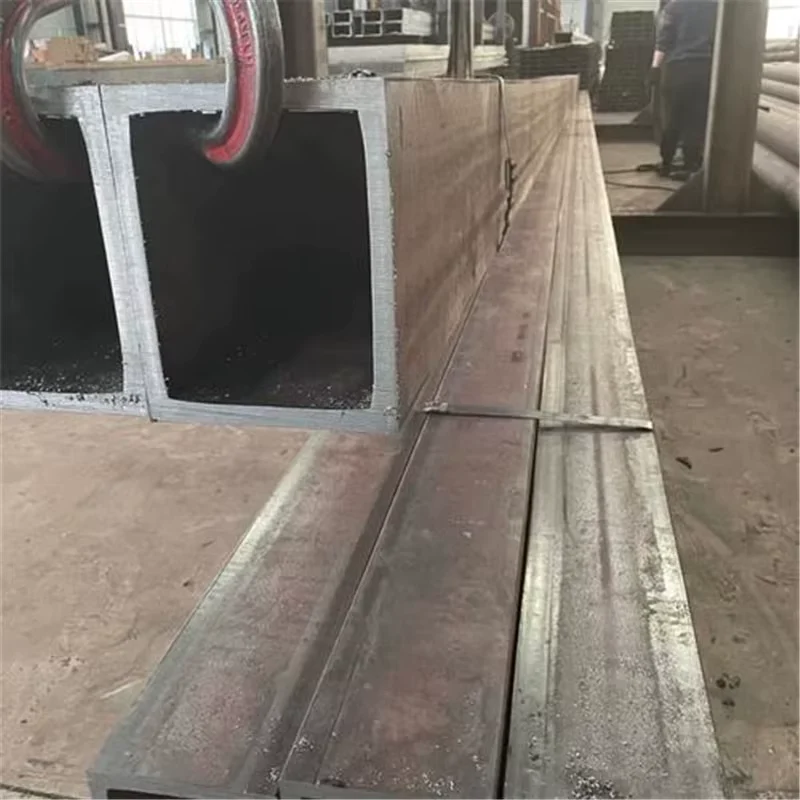
The defining requirement for a S355JR S275JR sharp corner square rectangular steel tube in frame construction is that adjacent faces meet at a true 90-degree angle with minimal outer radius. This allows base plates, splice connections, and gusset joints to sit flush without shimming — critical for moment-resisting frames where load transfer depends on bearing contact rather than weld fill alone. Our forming lines use dedicated sharp-corner dies that hold the inner radius within tight limits across the full 15×15 mm to 1000×1000 mm size range, so a 200×200×10 mm section arrives with corners that match the engineer’s drawing, not the mill’s convenience.
Meeting EN 10210 and EN 10219 Compliance for European Project Sites
Structural hollow sections shipped to EU member states must carry CE marking under EN 10210 for hot-finished or EN 10219 for cold-formed profiles, with Declaration of Performance documents referencing the correct harmonized standard. S355JR and S275JR grades fall under EN 10025-2 for chemical and mechanical requirements, while impact toughness at sub-zero temperatures pushes specification toward S355J0 or S355J2H for cold-climate infrastructure. [NEED_CITE: CE marking requirements for structural steel hollow sections under EU Construction Products Regulation] Wall thickness tolerance of ±1% ensures that section modulus calculations in the structural model remain valid — a critical point for customs inspectors verifying that delivered material matches the mill test certificate declarations.
Steel Grade Selection and ERW Forming Principles for Sharp Corner Profiles
S235JR, S275JR, and S355JR represent incrementally higher minimum yield strength within the EN 10025-2 non-alloy structural steel family, allowing engineers to reduce section weight while maintaining load capacity. The S355JR S275JR sharp corner square rectangular steel tube range also covers ASTM A53 GR.B and A36 for projects requiring cross-standard equivalence, plus Q460 for heavy-duty industrial frames where domestic Chinese specifications apply. ERW welding produces a continuous longitudinal seam with controlled heat input, and the subsequent cold-forming through sharp-corner dies reshapes the round parent tube into square or rectangular profiles without compromising weld integrity. Surface treatment selection — bare and oiled for indoor structural use, hot-dip galvanized for outdoor exposure, 3PE coating for buried or marine environments — is matched to the end-use corrosion category rather than applied uniformly.
Hidden Costs When Mill Certificates Do Not Match Delivered Chemistry
Ordering S355JR S275JR sharp corner square rectangular steel tube without verified material traceability exposes the project to three failure modes: chemistry that does not meet EN 10025-2 carbon equivalent limits, making weld procedure qualification invalid; wall thickness below the specified nominal minus tolerance, reducing section modulus and triggering structural re-assessment; and missing CE documentation that halts customs clearance at the destination port. [NEED_CITE: consequences of non-compliant structural steel documentation in international trade] Each failure mode carries cost far exceeding the price difference between a verified supplier and an unverified one — weld requalification runs, third-party re-inspection fees, and erection delays that no discount on invoice price can offset.
Why Project Buyers Source Sharp Corner Tubes Through Our Mill
We operate three dedicated ERW production lines running simultaneously, producing the S355JR S275JR sharp corner square rectangular steel tube range with in-house dimensional checks on corner radius and wall thickness before any bundle leaves the shop floor. Every heat carries an original mill test certificate documenting chemical composition and mechanical properties per EN 10210 or EN 10219, with SGS or BV third-party inspection available at the buyer’s request. Our inventory covers over 2,800 specifications across square, rectangular, round, and section steel categories, so a project requiring 200×100×8 mm S355J2H RHS alongside 300×300×12 mm SHS can consolidate into a single container with matched documentation. Factory-direct pricing eliminates intermediary margins, and our export team handles container loading optimization — critical when shipping 14-meter lengths alongside shorter cut-to-length pieces in the same 40-foot open-top or flat-rack unit.
Documentation & Compliance
- Mill test certificate documenting S355JR and S275JR chemical composition, yield strength, and tensile properties per EN 10210 or EN 10219, traceable to heat number
- CE certificate of conformity for EN 10210 hot-finished or EN 10219 cold-formed structural hollow sections, required for EU market placement
- ISO 9001:2015 quality management system certificate covering the full production and inspection process
- SGS or BV third-party inspection report verifying dimensional accuracy, surface condition, and sharp-corner radius compliance before shipment
- Material traceability documentation linking each bundle to its heat number, production date, and test certificate reference
- Customs document package including commercial invoice, packing list, bill of lading, and certificate of origin for destination port clearance
Packaging, Loading & Delivery
- S355JR and S275JR sharp corner tubes bundled with high-tensile steel strips and edge protectors to preserve 90-degree corner profiles during handling and ocean transit
- Galvanized surface finish wrapped in waterproof paper with desiccant to prevent white rust formation during container shipping
- Container loading plan optimized for mixed-size orders, placing longer 12–14 m sections on the bottom layer and shorter cut-to-length pieces on top to maximize payload within weight limits
- Custom cut-to-length service available for 5.8–14 m range, with each piece marked by heat number, steel grade, and dimensional specification
- Bare or oiled tubes shipped with end caps on beveled or threaded ends to prevent moisture ingress and thread damage
- FOB, CIF, and DDP shipping terms available with real-time tracking and professional documentation handling for destination customs clearance
Request a Quote with Mill Test Documentation
Submit your specification sheet — section dimensions, steel grade, wall thickness, total tonnage, and destination port — to receive a factory-direct quotation with delivery timeline and sample mill test certificate for chemistry verification. Our engineering team will confirm sharp-corner radius compliance and container loading feasibility for your size mix before contract signing.
Get Your S355JR S275JR Sharp Corner Tube Quotation
Send your specifications via email or WhatsApp to receive bulk pricing, EN 10210 mill test certificates, and container loading plans within 12 hours.
Contact: Shandong Xin Jiyuan Special Steel Tube Co., Ltd
Website: www.sdxinjiyuan.com
Tel: +86 531 8573 6315
Mobile/WhatsApp/WeChat: +86 188 5315 7756
Email: admin@sdxinjiyuan.com
Address: No.11889, Jingshi West Road, Lulian Group, Jinan City, Shandong Province, China
Frequently Asked Questions
Q: What is the difference between EN 10210 and EN 10219 for sharp corner square and rectangular tubes?
A: EN 10210 covers hot-finished structural hollow sections with favorable residual stress profiles and tighter corner radius control, while EN 10219 covers cold-formed welded hollow sections produced from cold-rolled coil. Both standards apply to S355JR and S275JR grades, but EN 10210 hot-finished tubes generally offer better dimensional accuracy for sharp-corner profiles and higher impact toughness at low temperatures.
Q: How do you verify material traceability with mill test certificates for EU customs clearance?
A: Every batch of S355JR S275JR sharp corner square rectangular steel tube ships with an EN 10204 3.1 mill test certificate documenting chemical composition, yield strength, tensile strength, and elongation, traceable to the specific heat number marked on each tube. This certificate, combined with the CE Declaration of Performance, satisfies EU customs requirements under the Construction Products Regulation and allows the material to be placed on European construction sites without additional testing.
Q: Can you produce non-standard sizes or custom cut-to-length with low minimum order quantities?
A: Yes, our production lines support custom cut-to-length within the 5.8–14 m range, and we hold ready stock across over 2,800 specifications including non-standard dimensions. The minimum order quantity is 1 ton, which accommodates trial orders for new projects or small-batch requirements for machinery manufacturers, while full-container bulk orders receive volume-based pricing.
Q: Which surface treatment is appropriate for outdoor structural applications?
A: For outdoor structural frames exposed to atmospheric corrosion, hot-dip galvanizing provides the longest service life with minimal maintenance. For marine or buried applications, 3PE coating offers superior moisture barrier protection. Bare or oiled finish is suitable for indoor structural use or when the tubes will receive site-applied painting as part of the final architectural finish.
Q: What is the typical production lead time and how do you optimize container loading for heavy tubes?
A: Standard sizes in S355JR and S275JR ship from ready stock within typical production lead times, while custom dimensions or large-tonnage orders follow scheduled production slots. Our export team prepares container loading plans that maximize payload by placing longer sections on the bottom and shorter pieces on top, and we consolidate multi-product orders — combining sharp corner RHS with SHS, round tubes, or section steel — into a single shipment to reduce freight cost per ton.